ROI Employee Handbook
Introduction
The success of any business and that of its employees depends very largely on the employees themselves, and so we look to you to play your part as we shall continue to play ours.
We provide equal opportunities and are committed to the principle of equality regardless of gender, civil status, family status, sexual orientation, religion, age, disability, race or membership of the traveller community. We will apply employment policies which are fair, equitable and consistent with the skills and abilities of our employees and the needs of the business. We look to your support in implementing these policies to ensure that all employees are accorded equal opportunity for recruitment, training and promotion and, in all jobs of like work, on equal terms and conditions of employment.
We will not condone any discriminatory act or attitude in the conduct of our business with the public or our employees and acts of unlawful harassment or discrimination are disciplinary offences.
We welcome you and express our sincere hope that you will be happy here in our team. We ask that you study carefully the contents of this Employee Handbook as, in addition to setting out our rules and regulations, it also contains a great deal of helpful information.
Sarah Woods
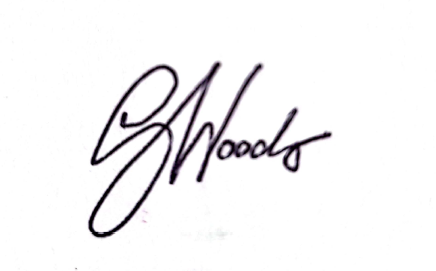
Head of People Services
Section 1
A) SELECTION AND PRE-EMPLOYMENT SCREENING
- The Company shall carry out detailed pre-employment enquiries to ensure that all personnel are competent and of good character.
- All persons offered employment by the Company for posts involving participation in, access to details of, or knowledge of security duties shall be screened.
- A personnel file shall be established for each person subject to screening.
- All applicants for relevant employment shall be required to provide the following:
- an acknowledgement, signed and dated by the applicant, that misrepresentation, or failure to disclose material facts may constitute grounds for dismissal.
- a signed statement authorising an approach to former employers, State institutions, personal referees, etc., for verification of their career and employment record.
- Provisional employment shall in no case exceed a period of nine months.
- Certified copies of all relevant personnel and screening documentation shall be held on file.
- These requirements shall be applied equally to full-time and to part-time employees and at all levels of seniority, including directors
- The screening period shall not be less than 5 years or from school leaving, whichever is the shorter duration
- Persons employed for security duties shall not be less than eighteen years of age
- The employee shall be classed as 'employed subject to satisfactory screening' whilst screening is continuing and shall be subject to a strict system of monitoring and supervision during this period.
- Screening covering the whole of the screening period shall be completed no later than 13 weeks after employment has commenced.
- Full screening for the period covered under (8) above shall apply except in the following circumstances:
Screening for a shorter period will be carried out where:
- an employee or director holds a current PSA licence, and has, immediately prior to the commencement of this employment, been employed by another licensed security provider, and the previous employer aforementioned has carried out the full screening requirements under this standard within the preceding five years.
Where the above applies screening shall be carried out from the date the screening by the previous employer had been conducted until the commencement of your employment with the Company.
B) PERSONAL INFORMATION
Our decision to offer you employment took into account the personal information you provided to us on the basis that it was correct and complete. In the event of such information proving to be untrue or misleading, we reserve the right to terminate any employment contract offered.
C) INDUCTION
At the start of your employment with us you are required to complete an induction session. During which all our policies and procedures (including Health and Safety) will be explained to you. Information relating to these will be given to you at the induction.
D) QUALIFICATIONS
Where it is a condition of your employment that you have the necessary qualifications in order to perform your duties, the Company will require you to provide evidence that these qualifications have been attained within two weeks of commencing employment. A failure to comply with this request may lead the Company to consider taking disciplinary action up to and including dismissal.
E) EMPLOYEE TRAINING
At the commencement of your employment, you will receive training for your specific job, and as your employment progresses your skills may be extended to encompass new job activities within the business. Any training needs should be raised with your Manager. We may offer certain types of training where Company specific needs are identified.
F) TRAINING AGREEMENT
The Company has a policy of encouraging its employees to undertake training in order to further their career within the Company. This will include assisting with costs of the training. However, in the event of termination of employment, for whatever reason, the Company will seek reimbursement of the costs in line with the Training Agreement. Further details are available separately.
G) PERFORMANCE REVIEW AND STAFF APPRAISAL
Our policy is to monitor your work performance on a continuous basis so that we can maximise your strengths and help you to overcome any possible weaknesses. It is our policy to conduct appraisals, and we will endeavour to meet with you to discuss your performance as well as your role within the Company.
H) JOB FLEXIBILITY
It is an express condition of employment that you are prepared, whenever necessary, to transfer to any alternative departments or duties either on a temporary or permanent basis within our business. This flexibility is essential as the type and volume of work is always subject to change, and it allows us to operate efficiently and gain maximum potential from our work force.
I) MOBILITY
Depending on the nature of your position, it is a condition of your employment that you are prepared, whenever applicable, to travel to and work at the sites/premises of our clients within reasonable travelling distance. This mobility is essential to the smooth running of our business.
J) SAFE PASS
When working at building sites you must be in possession of a current “Safe Pass” as required by current legislation.
Remuneration etc.
A) ADMINISTRATION
- Payment
- The pay week ends on Sunday midnight. Wages are available each week, ten days in arrears on Wednesday.
- You will receive a payslip showing how the total amount of your pay has been calculated. It will also show the deductions which have been made and the reasons for them, e.g. PAYE, PRSI, etc.
- Any contractual payments you may be entitled to for overtime hours will only be made when your hours physically worked exceeds those hours stated in your Statement of Main Terms of Employment per week. These calculations will only include physical time spent at work and will not include periods of annual leave, public holidays or additional statutory leave to which you are entitled and may have taken in a given week/relevant period.
- Any pay queries which you may have should be raised with your Manager.
2. Overpayments
If you are overpaid for any reason, the total amount of the overpayment will normally be deducted from your next payment but if this would cause hardship, arrangements may be made for the overpayment to be recovered over a longer period.
3. Income Tax and Social Insurance
At the end of each tax year an end of year statement will be made available to you through your Revenue’s myAccount service showing the total pay you have received from us during that year and the amount of deductions for Income Tax and PRSI. If there is a change in your circumstances, you should speak with the local revenue office.
4. Pension Contributions
During any period where payments from the Company are suspended, your pension contributions will be paused until your return to paid employment.
B) LATENESS/ABSENTEEISM
- You must attend for work punctually at the specified time(s) and you are required to comply strictly with any time recording procedures relating to your area of work.
- All absences must be notified in accordance with the sickness reporting procedures laid down in this Employee Handbook.
- All periods of lateness must be notified to your Manager no later than your scheduled start time. Failure to do so may result in other arrangements being made to cover your duties and you may be sent off the premises for the remainder of the day without pay.
- Lateness or absence may result in disciplinary action and/or loss of appropriate payment.
C) CLOCKING IN AND OUT
We operate a clocking in/out policy with which all employees are expected to comply. Upon arrival to work, you must immediately clock in the time you entered the premises. Upon leaving the premises you must ensure that you clock out. It is not permissible under any circumstances for any employee to clock in or out on behalf of another. You must also ensure that you clock in/out for all authorized rest breaks. In the event that you forget or are unable to do this for any reason you must report this to your Manager. The information collated using this system is used as a roll call in the event of an evacuation, may be used to ensure employees are paid accurately, and for monitoring purposes. It is therefore imperative that the information is accurate. You should be aware that falsifying records is considered a gross misconduct offence in accordance with our disciplinary procedures. Failure to adhere to this procedure may result in summary dismissal and/or incorrect or delayed payment of wages.
D) LEAVING CLIENTS SITES
Employees are not permitted to leave any of our clients’ premises without the permission of Management.
E) SHORTAGE OF WORK/FINANCIAL DISRUPTION
In the event that the Company is faced with a shortage of work, or a period of financial disruption, or is unable to provide you with work for any other reason, then you agree that the Company may temporarily place you on reduced working hours, short time working, lay-off, and/or implement a temporary pay reduction.
If you are placed on a reduced working week, or short time working, your pay will be reduced according to time actually worked and, if applicable, in accordance with any concurrent temporary pay reduction. If you are placed on lay off, then no payments will be made to you. The Company will seek to provide you as much notice as is reasonably practicable for any shortage of work or pay reduction. Any benefits accrued during such a period of reduced working hours, short time working or lay-off will be on a pro rata basis.
The entirety of this section entitled “Shortage of Work / Financial Disruption” forms part of your contractual terms and conditions.
F) WORKING TIME POLICY
In accordance with the working time legislation, SecuriGroup Security Officer Services Ltd, is committed to the welfare of its employees with regard to their time spent at work. All employees, whether full-time, part-time or fixed term are covered by the legislation.
Daily Break Period - All employees must take a break of at least 15 minutes if working more than four and a half hours or a break of at least 30 minutes if working more than six hours. (This may be inclusive of the initial 15-minute break).
Daily Rest Period - Employees affected by this legislation must take a rest period of 11 consecutive hours in each 24-hour period.
Weekly Rest Periods - All employees must take a rest period of at least 24 consecutive hours in each period of seven days.
You are required to notify your Manager in writing, within one week, if you did not or have not been able to avail of your rest breaks from work and setting out why you believe you were unable to do so. Your Manager will look at the reasons why you were unable to take your break and at any health and safety issues that might or have arisen relating to you and your job. If you do not notify your Manager within one week you will forfeit that break. If after investigation you are offered the break and refuse, you are at fault and the Company is not obliged to offer you a further rest break. However, we do ensure employee’s rest breaks are taken.
Severe Weather and Other Travel Disruption Policy
A) INTRODUCTION
We recognise that severe weather conditions may present circumstances which impact our employees’ ability to get to work either by making travel unsafe or by causing disruption to road networks and public transport infrastructure. Disruption to the travel network may also be caused by other events such as industrial action within public transport services.
This policy sets out our expectations of our employees, and what you can expect from us, when transport to work is affected.
B) EMPLOYEE ACTIONS
We expect that you should always make every effort to attend the workplace. Severe weather conditions do not always prevent attendance at work, and employees may still be able to make their journey notwithstanding any inclement weather. However, we accept that it may not be safe for you to attempt a journey during times of severe weather. You should not put yourself or others at risk by attempting to do so. Where travel to work is not possible, you should contact your Manager at least four hours prior to the start of your shift or at the earliest opportunity on the first day of absence to notify them of your inability to attend work due to bad weather.
Where you are aware in advance of disruptions to your normal mode of transport to work, you should seek alternative modes of transport to ensure you are able to attend work on time. We will endeavour to alert you to any disruption or other such problems, which are known in advance, however, this may not always be possible. You should not, therefore rely on our notification as your only information source.
C) NOTIFICATION OF TEMPORARY CLOSURE
In situations of severe weather, we may be forced to close some or all sites. Any decision regarding this will be made on the basis of ensuring the health and safety of all employees, and you will be made aware of any closure via telephone from your Manager.
If the workplace must close, employees will be placed on lay off in accordance with the rights reserved in the Shortage of Work/Financial Disruption clause in this handbook. If conditions improve sufficiently during the day, employees should report this to your Manager and attend work unless told otherwise. As payments are suspended during periods of lay off, your pension contributions will be paused until your return to paid employment.
D) WHERE THE WORKPLACE REMAINS OPEN OR RE-OPENS
In instances of severe weather where the workplace remains open, you are expected to attend work as normal where it is safe to do so. Should you experience difficulties in travelling to work you should contact your Manager as soon as possible to notify them of this. Should you be unable to attend the workplace, you may be asked to attend another of our sites where reasonable to undertake your normal duties or to temporarily undertake other duties in order to meet the requirements of the business.
If local conditions improve sufficiently during the day, employees should report this to your Manager. Furthermore, if weather conditions improve then you are required to attend work where instructed by your Manager.
E) MAKING UP TIME
In the event that the workplace remains open during a period of severe weather, we reserve the right to make a determination that those employees who were unable to attend the workplace may be required to make up any lost time. The practical arrangements for making up the time will be set by your Manager.
During severe weather, you have no automatic legal entitlement to remain at home on full or reduced pay. Instead, you have the following options available to you, once agreed with Management:
- Annual leave - if you’re unable to attend work, you may choose to take this time as annual leave.
- Unpaid leave - an alternative is to take this time as unpaid leave. If you do this, your annual leave allowance will remain unaltered.
- Additional Hours - depending on the nature of your job role, it may be possible to make up this time, e.g. to work an extra hour a day. If you wish to pursue this as an option, you should discuss it with your Manager first.
Authorised Leave/Time Off from Work
A) MATERNITY/PATERNITY/ADOPTIVE/PARENT’S LEAVE
Entitlements are in accordance with statutory provisions. You should notify your Manager at an early stage so that your entitlements and obligations can be explained to you.
B) PARENTAL LEAVE
You may be entitled to parental leave, depending on the age of your child(ren) and your length of service with us. If you wish to take parental leave, you should notify your Manager so that any entitlement can be explained to you.
C) URGENT FAMILY LEAVE/FORCE MAJEURE LEAVE
If you need to take time off work for urgent, emergency or unforeseen family reasons, you may be entitled to a limited amount of paid leave in accordance with the current statutory provisions. The statutory entitlement to ‘force majeure’ leave may arise where your immediate presence with a near relative (your child, spouse or partner, sibling, parent or grandparent) is required as a result of his/her injury or illness in unforeseen circumstances. It is your responsibility to apply for this leave as soon as possible following your return to work. Further details are available from your Manager.
D) LEAVE FOR MEDICAL CARE PURPOSES
The Company will grant unpaid leave to employees for the purposes of providing personal care or support to a person who is one of the following:
i. a person of whom the employee is the relevant parent;
ii. the spouse or civil partner of the employee;
iii. the cohabitant of the employee;
iv. a parent or grandparent of the employee;
v. a brother or sister of the employee;
vi. a person other than the one specified above who resides in the same household as the employee.
The individual outlined above must be in need of significant care or support for a serious medical reason.
The maximum entitlement for the leave is five days unpaid leave per year. The leave can be taken as single days but cannot be taken in a period of less than one day.
When you take or intend to take the leave, you should as soon as reasonably practicable, provide your Manager with a written request stating the dates of leave and the reason for taking or applying for the leave. Your signature must be included in the application. Upon receipt of the application, your Manager will retain the application and will provide you with written acknowledgement of receipt of the application and this must be retained by the employee. You must be prepared to provide additional information or proof to support the application for the leave.
E) CARER’S LEAVE
You may be entitled to carer’s leave, depending on whether you meet certain Social Welfare criteria and your length of service with us. If you wish to take carer’s leave, you should notify your Manager so that any entitlement can be explained to you.
F) DOMESTIC VIOLENCE LEAVE
Employees are urged to bring up any issues with the appropriate person if they think they could benefit from the Company’s support under this policy. You should reach out to your Manager to discuss entitlements under the legislation. Employees are entitled to five days of paid domestic violence leave per annum, as prescribed by the legislation. This leave is separate from other types of leave and does not accumulate.
G) JURY SERVICE
If you are summoned to Jury Duty, you must inform your Manager as soon as possible and produce the jury summons. If you are summoned for Jury Duty on a scheduled working day you should provide evidence of attendance at Court to your Manager. Where you are called for Jury Duty, you will be entitled to time off with pay for the required length of time. If you do not have to attend court, you are expected to report to work each day.
H) WITNESS DUTY
Where you are required to attend as a witness, no payment shall be made by the Company.
I) BEREAVEMENT LEAVE
Individuals' reactions to bereavement vary greatly and the setting of fixed rules for time off for the death of a close relative, for example spouse, child, parent, brother, sister is therefore inappropriate. In such cases you should discuss your circumstances with your Manager and agree appropriate time off. You will receive a minimum of one day’s pay in respect of the death of an immediate family member (parent, child or sibling, spouse, grandparent, grandchild).
J) TIME OFF IN LIEU
Your Manager must approve any request for time off in lieu to be worked and/or when it is to be taken. All staff are required to keep an accurate record of their hours worked and will be provided with a timesheet for this purpose. Time off in lieu must be recorded in the TL sheet. Time off in lieu must be taken within the period as detailed on your SMT/as mutually agreed or will be forfeited. Any request to carry time off in lieu forward beyond the said period must be made in writing to your Manager and is at his/her discretion.
K) TIME OFF FOR RELIGIOUS OBSERVANCE
You should make any requests for time off for religious observance to your manager as early as possible. Although you have no legal or contractual right to religious leave or time off to pray, the Company will consider all such requests.
Time off for religious observance must be taken from your rest periods or annual holiday entitlement.
If you wish to take the time off as annual holiday, you should make the request in accordance with the Company's annual holiday procedures. For the avoidance of doubt, the Company's rules relating to annual holiday will apply.
L) TIME OFF
Circumstances may arise where you need time off for medical/dental appointments, or for other reasons. Where possible, such appointments should be made outside normal working hours. If this is not possible, time off required for these purposes may be granted at the discretion of your Manager and will normally be without pay.
Holiday Entitlement & Conditions
A) ANNUAL HOLIDAYS
1) Your holiday year begins on 1st April and ends on 31st March each year.
2) Your annual holiday entitlement is shown in your individual Statement of Main Terms of Employment (Form SMT).
3) You are required to take all of your holiday entitlement in the current holiday year. We do not give payment in lieu of holidays.
4) Should your working hours be reduced due to a downturn of work, in accordance with our Shortage of Work/Financial Disruption Policy, any annual leave or sick leave entitlements accrued during this period will be on a pro rata basis.
5) Variable hour’s workers will accrue annual leave on the basis that you will receive 8% of the annual hours worked in a leave year subject to a maximum of four of your working weeks.
B) CONDITIONS APPLYING TO YOUR ANNUAL HOLIDAY ENTITLEMENT
1) We operate an online system for booking holidays via the online portal. You will be given the rights to request absence online. If you want to know your exact entitlement you can ask your line manager or view it on the online portal.
2) You should submit a holiday request via the online portal. All holiday requests must be approved by your Manager before making any firm holiday arrangements.
3) Holiday requests will only be considered if you make a request via the online portal.
4) We will allocate agreed holiday dates on a "first come - first served" basis to ensure that operational efficiency and minimum staffing levels are maintained throughout the year.
5) Once you have registered your holiday request online, you will receive an email authorising or declining your request. If you feel that your request has been unreasonably refused for any reason you should refer the matter to your Manager, who will endeavour to ensure that you have every opportunity to take your holidays at the time you request them, but will need to balance your requests with the needs of the Company.
6) You should give at least four weeks' notice of your intention to take holidays and one weeks' notice is required for odd single days.
7) You may not normally take more than two working weeks consecutively.
8) Your holidays will be paid at your normal basic pay unless otherwise specified.
9) In the event of the termination of your employment any holidays accrued but not taken in the current holiday year will be paid for. Where an employee has provided notice to terminate their employment, the Company may require that any outstanding annual leave entitlement be taken in this notice period. However, in the event of you having taken holidays which have not been accrued pro-rata in the holiday year, then the appropriate payments will be deducted from your final wages/salary. This is an express written term of your contract of employment.
10) Please note that Good Friday is not a public holiday in Ireland. If you wish to have this day off it must be requested as annual leave.
11) Annual leave cannot be granted in place of sick leave.
12) If you have any unallocated annual leave days remaining by April each year, the Company will require you to provide notice, within two weeks of when you intend to take your remaining leave entitlement. Failure to do so will result in the Company allocating these days for you, and you will be given one month’s notice of any such assigned leave.
13) The Company reserves the right to refuse annual leave requests where the Company is unable to facilitate such a request. This extends to cases where you have requested at least two unbroken weeks of leave having worked more than eight months of the leave year.
C) PUBLIC HOLIDAYS
Your entitlement to public holidays and to any additional payment which may be made for working on a public holiday is shown in your individual Statement of Main Terms of Employment (Form SMT).
Sickness/Injury Payments & Conditions
A) NOTIFICATION OF INCAPACITY FOR WORK
2) Personal contact is required at all times when contacting the Company. The sending of text messages, WhatsApp message, email or notification by social media will not be accepted as valid notification.
B) EVIDENCE OF INCAPACITY
2) If your incapacity extends to more than seven days, you are required to notify us of your continued incapacity once a week thereafter.
1) You are entitled to Statutory Sick Pay (SSP) if you are absent from work due to sickness or injury provided you meet the criteria in the SSP legislation. If you wish to avail of the SSP, you must provide the Company with a medical certificate from your doctor on the first day of absence.
The number of days per year in which you will be entitled to SSP will vary according to SSP legislation. You will receive SSP from the first day of absence if you are eligible. In order to qualify for SSP, you must have 13 weeks continuous service and provide your Manager with a medical certificate as proof of illness or injury.
2) Any contractual sickness/injury payments are shown in your individual Statement of Main Terms of Employment (Form SMT). Any payments made to you whilst on sick leave will be based exclusively on your basic rate of pay.
3) The Company reserves the right to withhold contractual sickness payments where an employee goes on sickness absence, either certified or uncertified, after the commencement of disciplinary / grievance proceedings or during investigations into alleged breaches of rules, procedures, policies, or contractual obligations or whilst during a period where an employee has provided notice to terminate their employment.
4) Any days of contractual sickness/injury pay which qualify for state benefit will be offset against the state benefit received in respect of your absence on a day-to-day basis. Where contractual sickness/injury pay is provided you may be required to forward confirmation from Social Welfare the amount you are entitled to. You should have this paid directly to you and then this amount will then be topped up by us.
5) If you are entitled to any payments in excess of state benefit and your entitlement expires, full or part payment may be allowed at our discretion where it is considered that there are special circumstances warranting it.
6) Where the circumstances of your incapacity are such that you receive or are awarded any sum by way of compensation or damages in respect of the incapacity from a third party, then any payments which we may have made to you because of the absence shall be repaid by you to us up to an amount not exceeding the amount of the compensation or damages paid by the third party.
7) Failure to abide by the rules of the contractual sickness/injury scheme will disqualify you from participation. This can include not forwarding doctor’s medical certificates, failure to provide information from Social Welfare, etc.
8) Any payments made as part of the Company’s contractual sick pay scheme will be paid on a pro rata basis for part time employees or those working on a reduced working week.
D) RETURN TO WORK
1) You should notify your Manager as soon as you know on which day you will be returning to work, if this differs from a date of return previously notified.
2) If you have been suffering from an infectious or contagious disease or illness such as rubella or hepatitis/viral gastroenteritis (winter vomiting bug) you must not report for work without clearance from your own doctor.
3) On your return to work after any period of sickness/injury absence (including absence covered by a medical certificate), you are required to report to your Manager.
4) For any period of absence where you are required to provide a doctor’s medical certificate to cover your absence, you may also be required to supply a certificate from your doctor stating that you are fully fit to resume your normal duties.
E) GENERAL
1) Submission of a medical certificate although giving us the reason for your absence, may not always be regarded by us as sufficient justification for accepting your absence. Sickness is just one of a number of reasons for absence and although it is understandable that if you are sick, you may need time off, continual or repeated absence through sickness may not be acceptable to us.
2) In deciding whether your absence is acceptable or not we will take into account the reasons and extent of all your absences, including any absence caused by sickness. We cannot operate with an excessive level of absence as all absence, for whatever reason, reduces our efficiency.
3) We will take a serious view if you take sickness/injury leave which is not genuine, and it will result in disciplinary action being taken.
4) If we consider it necessary, we may ask your permission to contact your doctor and/or for you to be independently medically examined by our Occupational Health Specialists, Health Assured Limited. Where you are independently medically examined the cost will be borne by us. We may also ask your permission to contact your own doctor for an assessment on your state of health. Failure to comply with such a request will cause us to make our conclusion based on the evidence to hand.
5) During any period of absence from work due to illness or injury you are required to adhere to all Company policies in relation to conduct including refraining from engaging in work for a competitor/another Organisation. This includes taking part in any activities that may put yourself in a situation that may extend/accentuate any illness or injury. Such behaviour may lead to loss of payments where applicable and in some cases disciplinary action up to and including dismissal.
Other Benefits
A) DEATH IN SERVICE BENEFIT
A non-contributory Death in Service Benefit, equal to one year’s basic pay, will apply after 6 months service in the Company, and up to the age State Pension.
B) PERSONAL ATTACK BENEFIT
A non-contributory Personal Attack Benefit will apply, after 6 months service in the Company, and up to the age State Pension, who are attacked in the course of their duty, resulting in an injury.
The amount payable will be as follows:
- After 6 months’ service 10 weeks’ basic pay, less Social Welfare
- After 18 months’ service 15 weeks’ basic pay, less Social Welfare
- After 30 months’ service 20 weeks’ basic pay, less Social Welfare
- After 42 months’ service 26 weeks’ basic pay, less Social Welfare
C) EMPLOYEE ASSISTANCE PROGRAMME
We recognise that sometimes you may face certain challenges in your work and home life that are difficult to deal with. We subscribe to a confidential and professional life management service which provides you with a qualified counsellor who can offer personal support for any practical or emotional challenges you may be facing. The service is initially provided via telephone and online advice but face to face meetings will be arranged where this is felt clinically appropriate. This service is totally confidential. You can contact the Free 24-Hour Confidential Helpline on 1800 936 710 or access the website via healthassuredeap.com. More details of this service are available from your Manager.
General Terms of Employment, Information & Procedures
A) CHANGES IN PERSONAL DETAILS
You must notify us of any change of name, address, telephone number, etc., so that we can maintain accurate information on our records and make contact with you in an emergency, if necessary, outside normal working hours. A Change in Personal Details form is available from your Manager for this purpose.
B) EMPLOYEES' PROPERTY
We do not accept liability for any loss of, or damage to, any personal property.
C) LOST PROPERTY
Articles of lost property should be handed to your Manager who will retain them whilst attempts are made to discover the owner.
D) BUYING OR SELLING OF GOODS
You are not allowed to buy or sell goods on your own behalf on our premises or our clients premises during working hours.
E) COLLECTIONS FROM EMPLOYEES
Unless specific authorisation is given by your Manager, no collections of any kind are allowed on our premises.
F) FRIENDS AND RELATIVES CONTACT
You should discourage your friends and relatives from either calling on you in person or by telephone except in an emergency.
G) CAR INSURANCE
If you are using your own car for business purposes, you must ensure that your car insurance provides adequate cover, and a copy of your current certificate is made available to your Manager.
H) DRIVING LICENCE
If it is a requirement of your job duties that you possess a current driving licence, the loss of such a licence as a result of a motoring conviction or on health grounds, may, if we are unable to provide suitable alternative employment, lead to the termination of your employment. You are required, wherever applicable, to produce your driving licence for our inspection at any time when so requested. Data collected about driving licences will be processed in line with current Data Protection legislation.
I) CAR UPKEEP
You are obliged to ensure that your car is properly maintained and has an up-to-date NCT certificate, and a copy of your current certificate is made available to your Manager.
J) TRAVEL EXPENSES
We will reimburse you against receipts for authorised costs involved whilst travelling on our business, details of which will be issued separately.
K) EMPLOYMENT PERMITS
Should you require an Employment Permit/Green Card or similar paperwork to work in Ireland, it is your responsibility to maintain the validity of such documents. You should apply for a new permit in a timely manner prior to expiry of your existing permit. You must provide copies of all such documentation to your Manager on receipt of same. Failure to provide a valid permit may result in you being placed on unpaid leave until the permit can be obtained as it is illegal to work in Ireland without the relevant permit. Failure to provide copies of your employment permit in a timely manner may result in disciplinary action being taken. In addition, non-renewal of an employment permit by the relevant authorities may leave the Company with no alternative but to terminate your employment under SOSG (failure to provide a Statutory Requirement) in line with the Company’s disciplinary procedures.
L) CLIENT RELATIONS
We provide services to clients, and you are employed to do work on behalf of our clients, sometimes on their own premises. Because of this relationship our clients may from time-to-time request that an individual be removed from a job in accordance with their contract with us. If this occurs, then we may have no alternative but to terminate your employment. This procedure is separate from any concurrent disciplinary matter which may need to be addressed.
M) SOME OTHER SUBSTANTIAL GROUNDS
The Company may terminate your employment citing Some Other Substantial Grounds (SOSG) for termination other than capability, conduct or redundancy.
N) RECORDING OF FORMAL MEETINGS
We reserve the right to record (both audio and visual) any meetings with employees, including meetings conducted in accordance with the Company’s Capability & Competence policy, Disciplinary Rules & Procedures, Grievance Procedure, Redundancy Procedure, Personal Harassment Policy & Procedures, Bullying Prevention Policy, and any Appeals Procedure. The right to record meetings extends to any formal meetings conducted by a third party. A copy of any such recording can be made available on request.
O) THIRD PARTY INVOLVEMENT
We reserve the right to allow third parties to chair any meeting, for example disciplinary, capability, grievance. This is not an exhaustive list. We will seek your consent at the relevant time to share relevant ‘special categories of data’ where it is necessary for the purposes of that hearing.
Retirement Policy
A) INTRODUCTION
This policy details the procedure to be followed when staff are approaching retirement age. Our retirement policy is drafted in line with the Employment (Contractual Retirement Ages) Bill 2025. The procedure outlined below will ensure that the Company supports employees at this time of significant change. All employees, whether full-time, part-time or fixed term are covered by this policy.
B) RETIREMENT AGE
The retirement age in our Company is in line with State Pension Age although the employee may submit a request to continue in employment beyond this date. It is our policy for employees to retire at the end of the week in which the applicable retirement date falls.
C) OBJECTIVE JUSTIFICATION
In accordance with the Employment (Contractual Retirement Ages) Act 2025 and the Employment Equality Acts or Employment Equality Directive, the Company has identified the following legitimate aims which are capable of objectively justifying a difference of treatment on the grounds of age, where it is appropriate, necessary, and serves legitimate business aims, including encouraging recruitment;
- sharing employment between the generations;
- establishing a balanced age structure within a particular employment;
- workforce planning;
- avoiding disputes concerning employees’ fitness to work; while safeguarding personal and professional dignity;
- the protection of health and safety;
- promoting the access of young people to professions; and
- ensuring the best possible allocation of positions between the generations within a given profession.
D) PROCEDURE
Management will endeavour to inform the employee initially in writing of his/her impending retirement date with the Company. This is usually done at least six months in advance of the employee reaching the State Pension Age. The employee will then be invited to a meeting to discuss their retirement date in more detail with your Manager. The meeting will focus on addressing the following:
- Clear understanding of the retirement date and any possible issues arising;
- Exploration of measures (subject to agreement) which would support the pathway to retirement, for example flexible working, looking at alternative roles up to the date of retirement;
- Transitional arrangements in regard to the particular post; and
- Assistance around guidance and information.
E) REQUESTS TO WORK LONGER
The Company will carefully consider employee requests to work longer than the retirement age on an individual basis. Due consideration will be given to all requests.
F) EMPLOYEE ACTIONS
Employees, who wish to work beyond the retirement age, are required to submit a request in writing to your Manager, not less than three months and no more than 12 months before reaching their expected retirement date. On receipt of the request the employee will be invited to a meeting to discuss their request. You may be accompanied at the meeting by a fellow employee of your choice or an authorised trade union representative, who may act as a witness or speak on your behalf. The Company decision will be communicated in writing to the employee within one month of the request being received.
An employee may withdraw their notification and retire at any time, with notice in accordance with their contractual or statutory notice period, whichever is the shorter.
G) WHERE A REQUEST IS APPROVED
Importantly, where one employee’s request to work beyond the retirement date is approved, the approval does not apply universally to all other requests.
H) WHERE A REQUEST IS DECLINED
Where the Company refuses an employee’s request to work beyond the retirement date, the employees will be invited into a meeting to discuss why their request has not been granted. A written reply outlining the objective business justifications for the refusal.
You have the right to appeal the decision to decline your request within five working days of receiving the outcome by setting out your grounds in writing.
Termination of Employment
A) TERMINATING EMPLOYMENT WITHOUT GIVING NOTICE
If you terminate your employment without giving or working the required period of notice, as indicated in your individual Statement of Main Terms of Employment, you will have an amount equal to any additional cost of covering your duties during the notice period not worked deducted from any termination pay due to you. This is an express written term of your contract of employment.
B) RETURN OF VEHICLES
On the termination of your employment, you must return any Company vehicle in your possession to our premises. Failure to return the vehicle will result in the cost of its recovery being deducted from any monies outstanding to you. This is an express written term of your contract of employment.
C) RETURN OF OUR PROPERTY
On the termination of your employment, you must return all our property which is in your possession or for which you have responsibility. Failure to return such items will result in the cost of the items being deducted from any monies outstanding to you. This is an express written term of your contract of employment.
D) REPAYMENT OF OUTSTANDING MONIES
On the termination of your employment, we have the right to deduct from any termination pay due to you, any monies collected by you on our behalf and any advances of wages or any loans which we may have made to you. This is an express written term of your contract of employment.
E) RESIGNATIONS
All resignations by employees must be supplied in writing and stating their reason for resigning.
F) EXIT INTERVIEW
When you resign from the Company you may be asked to complete an exit interview form with your Manager. This information helps us to identify areas where we can improve employee relations and/or the arrangement of work and will be treated confidentially.
G) ACCRUAL OF ANNUAL LEAVE
On termination of your employment any holidays accrued but not taken in the current holiday year will be paid for. However, in the event of your having taken holidays which have not been accrued pro-rata in the holiday year, then the appropriate payments will be deducted from your final wages.
H) GARDEN LEAVE
If either you or the Company serves notice on the other to terminate your employment the Company may require you to take “garden leave” for all or part of the remaining period of your employment.
If you are asked to take garden leave you:
- must not attend your place of work or any other premises of the Company or any associated Company, unless otherwise requested by the Company.
- may be asked to relinquish immediately any offices you hold in the Company or any associated Company.
- may not be required to carry out your normal duties during the remaining period of your employment; however, you will still be available for answering queries.
- must return to the Company all documents, software, equipment, Company property and other materials (including copies) belonging to the Company or associated Company containing confidential information.
- must not, without the prior written permission of the Company, contact or attempt to contact any client, customer, supplier, agent, professional adviser, broker, or banker of the Company or any associated Company or any employee of the Company or any associated Company.
NB: During any period of garden leave you will continue to receive your full pay and any other contractual benefits.
Safeguards
A) RIGHTS OF SEARCH
1) We have the contractual right to carry out searches of employees and their property (including vehicles) whilst they are on our premises or business. You may be asked to remove the contents of your pockets, bags, vehicles, lockers, etc. These searches are carried out at random or on the basis of suspicion.
2) The Company will ensure an appropriate person carries out any such search, and an employee’s personal dignity will be maintained at all times.
3) Where a search is required, if practicable you will be accompanied by a fellow employee who is on the premises at the time a search is taking place, or at the time that any further questioning takes place.
4) Any lack of co-operation with such a request may result in disciplinary action.
5) We reserve the right to call in the Gardaí at any stage.
B) CONFIDENTIALITY
All information that:
a. is or has been acquired by you during, or in the course of your employment, or has otherwise been acquired by you in confidence,
b. relates particularly to our business, clients or that of other persons or bodies with whom we have dealings of any sort, and
c. has not been made public by, or with our authority,
shall be confidential, and (save in the course of our business or as required by law) you shall not at any time, whether before or after the termination of your employment, disclose such information to any person without our written consent.
You are to exercise reasonable care to keep safe all documentary or other material containing confidential information and shall at the time of termination of your employment with us, or at any other time upon demand, return to us any such material in your possession.
You must make yourself aware of our policies on data protection in relation to personal data and ensure compliance with them at all times.
C) COMPANY & PROFESSIONAL PRACTICES
At the start of your employment, you will be required to attend an induction session(s) at which you will be made aware of the standard procedures and code of practice applicable to your individual role and responsibilities. From time to time, we may amend the content of this induction and will require you to undergo further training as necessary.
D) SECURITY INDUSTRY APPROVED LICENCE
The Private Security Authority is the Government appointed regulating body for the Security Industry.
All those wishing to work within the security Industry in Ireland are required to have and display the appropriate licence.
Very serious penalties/fines for security companies and security officers will be incurred should PSA investigators find operatives working without the appropriate licence.
To qualify for a licence, you must meet the following criteria:
· Aged over 18.
· Pass an Identity check
· Pass a criminal record check
· Have achieved the appropriate PSA approved training qualification.
· You have the Responsibility for obtaining a licence and the licence belongs to you and NOT SecuriGroup Security Officer Services Ltd.
The PSA states:
You, the operative is responsible for obtaining a licence. However, the Company will help and provide the necessary administrative guidance to assist you through the process. Management will inform you of the licence(s) required in order that you can work in the relevant sectors of the security industry. With regards to the cost of the licence, you should refer to the PSA website.
Identity Check & Criminal Record Check:
The Company will provide the necessary documentation and assist you through the above process. The PSA insists that all documentation is completed correctly and will return any documentation not completed correctly. This will delay your application!
You as the employee should attend to any requests from the Company with regard to information or documentation as a matter of urgency in order that the process is completed as quickly as possible.
E) CONFLICT OF INTEREST
During this period of employment, the employee shall not, (except as a representative of the Company) be directly or indirectly engaged, concerned or interested in, any other business which:
- Is wholly or partly in competition with the business carried out by the Company.
- With regards to any goods or services is a supplier to, or customer/client of, the Company.
Also, during this period of employment, the employee shall not (except with authorisation of the Company or as a representative of the Company) disclose the Company’s business activities, prospects, suppliers, and staff which is confidential to any persons how so ever without the direct permission of your Manager. Company information relating to its business activities, products/service range, research & development and customer base is confidential and proprietary. The Company restricts disclosure of such information and requires similar restrictions on the part of the employee. The employee acknowledges the confidential and proprietary nature of such information. The employee also agrees not to disclose such information or any part to any other person, firm or corporation and for any purpose.
All documents, drawings sketches, designs and tangible items furnished by or created shall remain the property of the Company and should be returned promptly upon its request, together with all copies. On termination of employment with the Company, all such materials must be returned before employment has ceased.
F) OTHER EMPLOYMENT
If you propose taking up employment with an employer or pursuing separate business interests or any similar venture, you must discuss the proposal with your immediate Manager in order to establish the likely impact of these activities on both yourself and the Company. You will be asked to give full details of the proposal and consideration will be given to:
- Working hours
- Competition, reputation and credibility
- Health, safety and welfare
- Conflict of interest
- Confidentiality
You will be notified in writing of the Company’s decision. The Company may refuse to consent to your request based on the above grounds. If you work without consent this could result in the termination of your employment.
If you are unhappy with the decision, you may appeal using the Grievance Procedure.
G) GIFTS
You must ensure that you advise your Manager of any gifts (including monetary gifts) received from customers/suppliers or other third parties connected with the business or anyone or organisation soliciting for business.
H) DATA PROTECTION
The General Data Protection Regulation (GDPR) and the current Data Protection Legislation regulate our use of your personal data. As an employer it is our responsibility to ensure that the personal data, we process in relation to you is done so in accordance with the required principles. Any data held shall be processed fairly and lawfully and in accordance with the rights of data subjects.
We will process data in line with our privacy notices in relation to both job applicants and employees.
You have several rights in relation to your data. More information about these rights is available in our “Policy on your rights in relation to your data”. We commit to ensuring that your rights are upheld in accordance with the law and have appropriate mechanisms for dealing with such.
We may ask for your consent for processing certain types of personal data. In these circumstances, you will be fully informed as to the personal data we wish to process and the reason for the processing. You may choose to provide or withhold your consent. Once consent is provided, you are able to withdraw consent at any time.
You are required to comply with all company policies and procedures in relation to processing data. Failure to do so may result in disciplinary action up to and including dismissal.
I) CLOSED CIRCUIT TELEVISION
Closed circuit television (CCTV) cameras are used on our premises or our clients' premises for security purposes. Notwithstanding this express purpose we reserve the right to use any evidence obtained through CCTV in any disciplinary issue. We will ensure all personal data obtained in this way is processed in line with the current Data Protection legislation. You may refer to the employee privacy notice for more information on the data we hold, the reasons we hold it and the lawful basis which applies.
J) SIGNING OF CORRESPONDENCE, ACCOUNTS, ETC.
Only a member of Management may sign in the name of the Company. This includes all audit reports, correspondence, miscellaneous reports, etc.
General correspondence may be signed by Managers/Supervisors only in their own name. Any correspondence of a contentious nature should be approved by a member of Management. Copy letters must be initialled by your Manager. No member of the staff below Manager/Supervisor level may sign any correspondence.
K) AUTHORISED ACCESS
You must ensure that all procedures and guidelines are followed when securing the building prior to leaving. The keys/fobs and any security measures such as alarm codes must be kept safe at all times. You must not give the keys/fobs or alarm code to any third party unless authorisation is obtained from your Manager. Any loss or damage caused as a result of your failure to follow procedures or your negligence in ensuring the safekeeping of the keys and alarm code will result in disciplinary action which could lead to your summary dismissal.
L) PERSONAL RELATIONSHIPS
We recognise that, from time to time, close personal relationships may develop between members of staff and between staff and customers. In order to ensure that potential conflicts of interest are avoided, members of staff who are in that position are strongly recommended to advise your Manager or a member of the management team.
Any such information will be treated in the strictest confidence. We fully acknowledge the right of employees to privacy in their personal affairs. However, experience has shown that the effect of such relationships can cause a blurring of judgement whereby conflicts of interest arise and which can cause us to lose confidence in the person’s integrity and reliability.
Making a Protected Disclosure - Whistleblowing
A) INTRODUCTION
Our Organisation is determined to ensure that employees, contractors, agency staff, trainees, temporary employees, volunteers, board members, job applicants, shareholders and former employees are knowledgeable of their rights and responsibilities in relation to disclosures.
In line with legislation, all employees, contractors, agency staff, trainees, temporary employees, volunteers, board members, job applicants, shareholders and former employees who make a protected disclosure of relevant information will have legal protection from being penalised as a result of making that disclosure. In order to benefit from this legal protection, the individual must show that they had a reasonable belief that a relevant wrongdoing had occurred, or was likely to occur, and that this relevant wrongdoing came to their attention during the course of their employment.
B) RELEVANT WRONGDOINGS
Certain disclosures afford the individual some protection under law, definitions of relevant wrongdoings for the purposes of this are:
a) that an offence has been, is being or is likely to be committed;
b) that a person has failed, is failing or is likely to fail to comply with any legal obligation, other than one arising under the worker’s contract of employment or other contract whereby the worker undertakes to do or perform personally any work or services;
c) that a miscarriage of justice has occurred, is occurring or is likely to occur;
d) that the health or safety of any individual has been, is being or is likely to be endangered;
e) that the environment has been, is being or is likely to be damaged;
f) that an unlawful or otherwise improper use of funds or resources of a public body, or of other public money, has occurred, is occurring or is likely to occur;
g) that an act or omission by or on behalf of a public body is oppressive;
h) breaches of certain EU law occurred; and
i) discriminatory or grossly negligent or constitutes gross mismanagement, or that information tending to show any matter falling within any of the preceding paragraphs has been, is being or is likely to be concealed or destroyed.
C) DISCLOSURE CRITERIA
The disclosure must be where the individual believes:
a) that the disclosure relates to a relevant wrongdoing as defined in B) above.
b) that the information disclosed, and any allegation contained in it, are substantially true.
If these criteria are fulfilled, the individual is not liable for damages by making a protected disclosure and nor shall they be penalised by their employer for having done so.
D) PROCEDURE FOR MAKING A DISCLOSURE
Any individual as mentioned above may make an external Protected Disclosure to a regulator know as a “prescribed person”. The prescribed person must be a nominated person or body as specified by the Protected Disclosures (Amendment) Act 2022. A list of suitable prescribed person can be found on S.I. No. 367/2020 - Protected Disclosures Act 2014 (Disclosure to Prescribed Persons) Order 2020 (irishstatutebook.ie). An employee may bypass the above methods and report any concern directly to the Protected Disclosures Commissioner who will refer the report to a suitable regulator.
E) GENERAL NOTES
We encourage you to use the procedure if you are concerned about any wrong-doing at work. However, if the procedure has not been invoked in good faith (e.g., for malicious reasons or in pursuit of a personal grudge), then it will make you liable to immediate termination of employment or such lesser disciplinary sanction as may be appropriate in the circumstances.
Code of Ethical Practice
A) STATEMENT OF ETHICAL PRINCIPLES
The Company is committed to the maintenance and development of a culture where integrity and ethical standards are given the highest priority. Our ability to function effectively relies on the implicit trust of the public and clients, and their belief that we can carry out our duties in a fair and impartial manner.
Our Statement of Ethical Principles and Code of Ethical Practice relates to every member of the Company.
Our Statement of Ethical Practice and Code of Ethical Practice are not intended to cater for all eventualities. Instead, they are designed to provide guidance in respect of issues and decisions, which may arise in the course of our duties and everyday lives.
All staff must report any conduct considered to be unethical. Where there is suspected wrongdoing, confidentiality will be given the highest priority and will be maintained as far as possible and supported by management. The focus is, however, about preventing situations where employees may be compromised.
This statement and Code are intended to be living documents, which will continue to evolve. What may have been acceptable or unacceptable conduct many years ago may now no longer be so.
Equally conduct, which may be considered entirely appropriate or inappropriate today, may, in years to come, become less so.
It is in the context that we all have a duty to examine our own conduct and be willing to expose ourselves to scrutiny in all spheres of our employment and off duty time.
B) EMPLOYEE’S RESPONSIBILITY
All members of SecuriGroup Security Officer Services Ltd have a responsibility to conduct themselves with professionalism, integrity and dignity at all times, whether on or off duty. All staff should ensure that they conduct their personal affairs in a manner that does not leave them exposed to compromise or corruption.
No member of SecuriGroup Security Officer Services Ltd should benefit either directly or indirectly from their activities on behalf of the Company and should neither offer, seek nor accept any form of inducement regarding the conduct of business on behalf of SecuriGroup Security Officer Services Ltd.
Conduct Outside Hours
It is acknowledged that all members of staff have a life to lead outside their working environment. As a guide to what is considered unacceptable outside working hours, it is important that personnel ask themselves whether the same conduct by others may be likely to warrant attention or public criticism. If it might, then such conduct, even though outside working hours, is likely to be unacceptable.
Members of staff must remember at all times that their conduct impacts on the perception and reputation of SecuriGroup Security Officer Services Ltd and they should act in a manner that presents a positive image of the Company. It is of paramount importance that members of staff demonstrate an awareness that conduct outside normal working hours has the potential to reflect positively or adversely on the Company is of paramount importance.
Should your conduct outside work bring us into disrepute (or be of a nature which may bring us into disrepute), damage our commercial relationships or affect our standing and reputation with our clients and/or with the other bodies and agencies with whom we work, you may be subject to disciplinary action up to and including summary dismissal.
Associations
Members of staff must exercise discretion at all times and display sound judgment with regard to friendships, associations and relationships. They are reminded that the perception of such associations is equally important. In addition, attendance at social events, membership of organisations and affiliation to particular groups should not compromise their position as an employee of the Company in any way. If anyone, is concerned that there is a potential for compromise or a conflict of interest through family relationships or other friendships or associations then they should declare their concerns to their line manager at the earliest opportunity. Declarations will be confidentially assessed, and "guidance/direction" will be given as appropriate.
Use of Facilities/Equipment
Employees of SecuriGroup Security Officer Services Ltd have a responsibility to properly manage resources.
Company facilities and equipment are for official use only and any private utilisation of such is not permitted unless official permission has been sought and granted, and then only when it does not disrupt official work.
Any employee who has any doubt as to whether the use of Company facilities or equipment is acceptable or not should seek the advice of a Line Manager or Supervisor.
A realistic approach will be taken in relation to the occasional personal use of Company equipment for a necessary purpose and discussions with management will clarify and authenticate such use.
Disclosure of Criminal Conviction/Road Traffic Conviction
Employees of SecuriGroup Security Officer Services Ltd must declare all criminal convictions received either prior to or during employment with the Company. In addition, such declarations must include Fixed Penalty Fines (with the exception of non-endorsable parking offences), Fiscal Fines and Fiscal Warning Letters. It is of paramount importance that Senior Management is made aware of all such matters at the earliest opportunity in order that appropriate support can be provided and the necessary action taken.
In addition, any member of staff who becomes aware of being the subject of a criminal investigation by the Gardai or any other law enforcement agency where the Company may not be aware of the investigation should report this matter at the earliest opportunity. Similarly, where a member of staff becomes the subject of criminal proceedings in circumstances where the Company may not be aware must report this to management
Conduct During Working Hours
Employees of SecuriGroup Security Officer Services Ltd should at all times fulfil the duty imposed on them by serving their clients/public and protecting all persons and property against illegal acts without fear or favour. In the performance of this duty, personnel must respect and protect human dignity, respect an individual's human rights, use only appropriate force as is absolutely necessary and at all times act with the utmost fairness, integrity and impartiality.
Arrested Persons/Detainees
Members of staff must ensure that all persons detained by the employees of SecuriGroup Security Officer Services Ltd are treated in a humane manner and with the respect for the inherent dignity and wellbeing of the human person.
Confidentiality - Media
Employees of SecuriGroup Security Officer Services Ltd. are granted access to private and sensitive information with regard to members of the public and victims of crime. This information is only available to enable personnel to perform their duties.
If SecuriGroup Security Officer Services Ltd. has a responsibility to provide information to and co-operate with the media, protocols and procedures are in place to legitimise such contact and ensure that only appropriate disclosure is made.
Unauthorised disclosure of information whether deliberate or unintentional to the media or any third party, has the potential to compromise clients and contracts, to undermine Company policy and to cause particular harm and distress to the members of the public or colleagues to whom the information relates and to undermine public confidence. Such disclosure may amount to a breach of trust/confidence and may constitute misconduct. Such disclosure can also be unlawful.
Unless specifically authorised to do so employees of SecuriGroup Security Officer Services Ltd should not disclose or use any information other than in the course of their official duties.
Use of Discretion
Employees of SecuriGroup Security Officer Services Ltd are encouraged to use discretion. However, this must be applied fairly, honestly and with complete impartiality.
Discriminatory Behaviour - Harassment
Employees of SecuriGroup Security Officer Services Ltd must not discriminate against any person, either colleague or member of the public, for any reason. Please refer to the Bullying and Harassment Polices below.
Discriminatory behaviour or any form of harassment is at best highly inappropriate, may well be illegal and will be dealt with accordingly. Staff is reminded that the use of foul or offensive language whether to colleagues or members of the public is regarded as inappropriate at all times.
SecuriGroup Security Officer Services Ltd has procedures in place to enable the victims of discriminatory behaviour or victims of harassment to make confidential reports concerning such matters and thereafter progress can be made with regard to resolution it at all possible in keeping with the wishes of the complainer.
In addition, members of staff have a duty to deal with discriminatory behaviour or harassment witnessed by them in respect of colleagues or members of the public and they must either endeavour to stop such parties and/or report them to an appropriate manager or supervisor with the Company. To do nothing in such a situation is not an option.
Reporting Corruption or Serious Misconduct
Integrity is the absolute cornerstone of modern-day corporate behaviour and is dependent upon the personal conduct of every employee of the Company and their willingness to take action against instances of corruption or serious misconduct.
SecuriGroup Security Officer Services Ltd has given an undertaking to ensure that effective reporting mechanisms are in place to facilitate any instances of confidential reporting. The Company is fully committed to tackling all aspects and allegations of corruption and misconduct.
Staff when they have suspicions or genuine concerns that an act of corruption or misconduct has been or may be committed are expected and encouraged to report this to management. Such reports should be made as soon as is reasonably practical.
SecuriGroup Security Officer Services Ltd has decreed that full support will be made available to staff reporting under such circumstances. The Company is not prescriptive as to how such reports are made and there are a number of options in this regard depending on the circumstances.
Vetting
SecuriGroup Security Officer Services Ltd must take care when placing employees in positions where the likelihood or potential for compromise is increased. In such instances there is a need to minimise the risk to both the organisation and its staff and this can be done through the introduction of a robust vetting policy.
In this regard, employees must make full and frank disclosure throughout any vetting procedure that they become involved in. The vetting that staff are subjected to will depend upon their role within the organisation and the level of the vetting required relative to that particular position. Employees are reminded that during the vetting process, sensitive information may require to be disclosed by them, however, this will be treated with the utmost confidentiality.
C) MANAGEMENT RESPONSIBILITIES
The role of service managers is critical to the success of this Code of Practice. The opportunities for malpractice and corruption within the Company are many and are increased when policies, procedures, supervision and management are weak. It is possible to simply identify policy and procedural weaknesses and introduce good preventative practice to minimise the risks. It is, however, more challenging to introduce some uniformity in supervisory management practice throughout the Company to address the above issues.
Managers and supervisors occupy a position of authority over staff and must strive to provide quality direction and guidance to their staff on issues of professional and ethical performance.
In so doing, they should use common sense, be transparent about their decision making and be prepared to explain their actions. Open and ethical management engenders trusts and respect and secures the full support of all the team.
The following bullet points are offered as a guide to the standards expected from managers and supervisors within SecuriGroup Security Officer Services Ltd.
- Promote and demonstrate ethical conduct at all times
- Positively intervene to prevent corrupt and unethical conduct
- Develop an open and honest management style to allow for effective communication with all staff
- Show support for lawful and reasonable decisions made by staff
- Critically reflect on honest mistakes and errors of judgment to achieve the best learning outcome
- Develop a supportive working environment by demonstrating decisive leadership, personal example and sound judgment and direction
Ensure all staff are aware of the Code of Ethical Practice and develop an environment where staff, seek advice/instruction It is the policy of SecuriGroup Security Officer Services Ltd that staff should not accept gifts or hospitality for personal benefit as a consequence of being so employed. Such offers should, in the main, be politely declined and line managers so advised. Where failure to accept a gift or hospitality would cause embarrassment or even offence to the individual or body making the offer, then such occurrences should be reported to a line manager without delay.
There will be occasions when during on duty activities, members of staff will be offered general hospitality as a matter of routine politeness, and without any underlying motive to corrupt or seek to influence. The acceptance of such hospitality is a matter for the discretion of the individual and judgment should be made based on the appropriateness or not of acceptance or refusal at that time. Where there is any doubt concerning appropriateness, compromise or perception then such hospitality should be refused.
It is imperative to the maintenance of the integrity of SecuriGroup Security Officer Services Ltd that members of staff do not place themselves under any financial or other obligation to individuals or organisations that might influence them in the performance of their duties or indeed could be perceived as doing so.
Any gifts or hospitality received and accepted by employees of SecuriGroup Security Officer Services Ltd which may be perceived as affecting their impartiality to discharge their duties should be declared and recorded. Such transparency can counterbalance allegations of inappropriateness and evidence the facts and circumstances of acceptance, thus maintaining the integrity of such decisions.
D) DISCOUNTS
From time to time "discount offers" are made to members of staff by businesses, without any thought being given to the questions of personal or corporate advantage. Such offers are often made to other organisations and reflect the benefit of conducting business with any large workforce. All members of staff are reminded of the perception that such offers can create, and any acceptance should be made after considering the appropriateness and the ethical implications.
E) USE OF IDENTITY CARDS
All members of staff are reminded that the use of Identity Cards is for official identification purposes only and should not be misused.
F) CHARITABLE EVENTS
Financial or other donations to SecuriGroup Security Officer Services Ltd in connection with recognised or approved charity events should be encouraged providing that appropriate records are maintained for audit purposes.
All personnel should ensure that these worthwhile causes receive the high level of support, which members of the Company have traditionally given, without this impacting on the credibility or integrity of the Company or any individual.
G) DECLARATION OF INTERESTS
Employees of SecuriGroup Security Officer Services Ltd must strive to maintain the highest levels of impartiality and integrity. There are many areas of potential conflicts of interest during daily activities and it is vital to remain alert and aware in respect of such possible compromise.
Conflicts of interests arise when personal circumstances, associations, affiliations or financial/business interests either affect impartiality or are perceived as such. Either way, such issues or perceptions may cast doubt on the integrity of individuals and their overall fairness and motivation when carrying out their duties.
Such conflicts perceived or otherwise should be avoided.
When personal circumstances, associations, affiliations or financial/business interests are, or may be perceived as, a conflict of interest they should be declared and recorded at the earliest opportunity.
H) SUBSTANCE MISUSE
SecuriGroup Security Officer Services Ltd is committed to providing a safe, healthy and productive working environment for all members of staff. In addition, we demand our personnel carry out their duties in an efficient and effective manner as far as possible without risks to themselves, their colleagues or members of the public.
In this regard, substance misuse (including alcohol, drugs etc.) may impact on the judgment and may threaten the health and safety of not only the individuals concerned but may involve their colleagues and members of the public.
A member of staff with any substance misuse problem should seek help before their work performance becomes adversely affected.
Members of staff have responsibilities to ensure that such misuse of substances does not adversely affect either themselves, colleagues or members of the public. Such misuse impacts on the safety of staff and members of the public and affects performance of duties, public confidence and the reputation of the Company therefore to do nothing in such a situation is not an option.
I) CONCLUSION
The SecuriGroup Security Officer Services Ltd. code of Ethical Practice is not a book of absolute rules. It is a common-sense document that offers guidance regarding expectations in relation to ethical conduct and standards in respect of all members of staff. It should be regarded as an ethical framework from which support can be sought in relation to the many ethical challenges faced during the professional and personal exchanges. Such guidance can only benefit individuals and the Company as a whole.
This code of Ethical Practice is designed to provide practical guidance that will help employees of SecuriGroup Security Officer Services Ltd to resolve many of the ethical dilemmas that they face both on and off duty.
Digital & Media Policy
A) E-MAIL AND INTERNET POLICY
1) Introduction
The purpose of the Internet and E-mail policy is to provide a framework to ensure that there is continuity of procedures in the usage of Internet and E-mail within the Company. The Internet and E-mail system have established themselves as an important communications facility within the Company and have provided us with contact with professional and academic sources throughout the world. Therefore, to ensure that we are able to utilise the system to its optimum we have devised a policy that provides maximum use of the facility whilst ensuring compliance with the legislation throughout. Company E-mail and internet facilities are monitored on a regular basis. Excessive or inappropriate use of these facilities will result in disciplinary action, up to and including dismissal.
2) Internet
Where appropriate duly authorised staff are encouraged to make use of the Internet as part of their official and professional activities. Attention must be paid to ensuring that published information has relevance to normal professional activities before material is released in the Company name. Where personal views are expressed, a disclaimer stating that this is the case should be clearly added to all correspondence. The intellectual property right and copyright must not be compromised when publishing on the Internet. The availability and variety of information on the Internet has meant that it can be used to obtain material reasonably considered to be offensive. The use of the Internet to access and/or distribute any kind of offensive material, or non-related employment issues, leave an individual liable to disciplinary action which could lead to dismissal. These provisions apply to internet usage on Company mobile phones also.
3) E-Mail
The use of the E-Mail system is encouraged as its appropriate use facilitates efficiency. Used correctly it is a facility that is of assistance to employees. Inappropriate use however causes many problems including distractions, time wasting and legal claims. The procedure sets out the Company's position on the correct use of the E-Mail system.
4) Procedures - Authorised Use
- Unauthorised or inappropriate use of the E-Mail system may result in disciplinary action which could include summary dismissal.
- The E-Mail system is available for communication and matters directly concerned with the legitimate business of the Company. Employees using the E-Mail system should give particular attention to the following points:
- all E-mail messages comply with Company communication standards.
- E-Mail messages and copies should only be sent to those for whom they are particularly relevant.
- E-Mail should not be used as a substitute for face-to-face communication or telephone contact. Flame mails (i.e. E-Mails that are abusive) must not be sent. Hasty messages sent without proper consideration can cause upset, concern or misunderstanding.
- if E-Mail is confidential the user must ensure that the necessary steps are taken to protect confidentiality. The Company will be liable for infringing copyright or any defamatory information that is circulated either within the Company or to external users of the system.
- offers or contracts transmitted by E-Mail are as legally binding on the Company as those sent on paper.
- The Company will not tolerate excessive use of the E-Mail/Internet system for personal use, and should not be used for unofficial or inappropriate purposes, including:
- any messages that could constitute bullying, harassment or other detriment.
- personal use where this interferes with work (e.g. social invitations, personal messages, blogging, jokes, cartoons, downloading music/films/clips chain letters, buying or selling of goods, accessing social networking sites or other private matters).
- use of social networking sites during your working hours is strictly forbidden. Due to the lack of confidentiality of these sites contact with clients or other third parties outside your working hours must not make reference to SecuriGroup Security Officer Services Ltd. or discuss business related to SecuriGroup Security Officer Services Ltd. Failure to abide by this policy may lead to disciplinary action which could result in your dismissal depending on the seriousness of the breach.
- on-line gambling.
- accessing or transmitting pornography.
- transmitting copyright information and/or any software available to the user.
- posting confidential information about other employees, the Company or its customers or suppliers.
5) Monitoring
We reserve the right to monitor all e-mail/internet activity by you for the purposes of ensuring compliance with our policies and procedures and of ensuring compliance with the relevant regulatory requirements. This includes monitoring of any additional accounts you may be requested to set up for the purposes of performing your work tasks, which are subject to the same rules as your work email account. Information acquired through such monitoring may be used as evidence in disciplinary proceedings. Monitoring your usage will mean processing your personal data. You may read more about the data we hold on you, why we hold it and the lawful basis that applies in the employee privacy notice.
J) VIRUS PROTECTION PROCEDURES
In order to prevent the introduction of virus contamination into the software system the following must be observed:
- Unauthorised software including public domain software Internet downloads must not be used.
- All software must be virus checked using standard testing procedures before being used.
K) USE OF COMPUTER EQUIPMENT
In order to control the use of the Company’s computer equipment and reduce the risk of contamination the following will apply:
1) The introduction of new software must first of all be checked and authorised by a nominated senior member of the Company before general use will be permitted.
2) Only authorised staff should have access to the Company’s computer equipment.
3) Only authorised software may be used on any of the Company’s computer equipment.
4) Only software that is used for business applications may be used.
5) No software may be brought onto or taken from the Company’s premises without prior authorisation.
6) Unauthorised access to the computer facility will result in disciplinary action.
7) Unauthorised copying and/or removal of computer equipment/software will result in disciplinary action, such actions could lead to dismissal.
L) STATEMENTS TO THE MEDIA
Any statements to reporters from newspapers, radio, television, etc. in relation to our business will be given only by a Director or a nominated member of Management.
M) USE OF SOCIAL NETWORKING SITES
Any work-related issue or material that could identify an individual who is a client or work colleague, which could adversely affect the Company, a client, or our relationship with any client, must not be placed on a social networking site. This means that work related matters, must not be placed on any such site at any time either during or outside of working hours and includes access via any computer equipment, mobile phone or any mobile device.
N) USE OF SOCIAL NETWORKING SITES FOR COMPANY BUSINESS
It may be a requirement of your role that you must use social networking sites to promote and further the development of the business. Any work or material created during the course of your employment remains the property of the Company, and is inclusive of any pages or contacts obtained on non-work computers or outside of normal working hours. Upon termination of your employment, you will be required to turn over all contacts obtained via social media outlets and delete any profiles created by you during the course of your employment.
O) ABUSE OF ANY SOCIAL NETWORKING PROFILES
The Company takes its responsibility towards its employees very seriously, and in light of this all employees should be aware that it will be considered an offence to abuse another employee’s social networking profile on Company time, by using Company equipment, or which implicates the Company in any way. Abuse of social networking profiles is considered to be the posting of offensive comments, pictures, links or otherwise on any employee’s social networking profile/page.
As an employee you should not access social networking sites during working hours, however if accessing these pages on designated rest breaks or outside of working hours you should not put yourself in a position where your profile is susceptible to hacking by any employee.
Any employee who is found to have abused any employee’s account may be in breach of the Company’s Harassment and/or Equality policies and may be subject to disciplinary action, up to and including dismissal.
P) COMPANY'S RIGHT OF ACCESS
Please note that we reserve the right and will exercise the right, when appropriate, to review, audit, intercept, archive, access and disclose all messages created, received or sent over the computer system. If requested, you are obliged to provide your Manager with all passwords for your computer system.
Q) COMMUNICATIONS
We will try to keep you informed about items of interest by means of our notice board and/or messaging platforms. You should use these, if you wish (with permission), to promote any particular item of interest to other employees. The Company will ensure at all times that its obligations under Data Protection legislation are met.
R) PRIVATE MAIL
Private mail should not be sent care of our address. No private mail may be posted at our expense except in those cases where a formal re-charge arrangement has been made.
S) PERSONAL MOBILE PHONES
You are permitted reasonable use of your personal mobile phone providing this does not interfere with the performance of your duties or cause any disruption to others.
You are not permitted under any circumstances to use your phone for the taking, recording or sharing of any work-related image unless authorised by Management.
You must not use your personal mobile phone whilst undertaking any task where safety is a consideration, and the use of the phone might interfere with the level of concentration required to undertake the task safely.
T) COMPANY MOBILE PHONES
A Company mobile phone is provided for business use only and at all times will remain the property of the Company. A Company mobile phone is provided primarily to enable you to carry out your role, i.e. to keep the Company informed at the earliest opportunity of matters which it needs to know and to be similarly contacted by the Company, or to contact customers or clients when you are working away from your base. Therefore, it is your responsibility to ensure that the phone is kept charged and switched on while you are on duty.
If you have been issued with a Company mobile phone, you are responsible for the safekeeping and condition of the phone at all times and you will be responsible for any cost of repair or replacement other than reasonable wear and tear.
Internet usage on Company mobile phones is subject to the same provisions set out in our E-mail and Internet Policy. The Company reserves the right to monitor all communications made on Company mobile phones in order to ensure compliance with our policies and procedures.
In the event that the phone is lost or stolen, the Company must be notified immediately in order to cancel the number and arrange for a replacement.
Upon termination of your employment, if you do not return your Company mobile phone or should your phone be returned in an unsatisfactory condition, the cost of replacement or a proportionate amount of this, as decided by the Company, will be deducted from any final monies owing to you, or you will otherwise reimburse the Company.
The Company recognises that you may have to make personal calls during working hours or outside normal working hours. Where it is deemed that an unreasonable number of personal calls, texts or data downloads have been made using the mobile phone, the Company reserves the right to deduct those costs, either through deduction from pay or otherwise as agreed and excessive use may result in disciplinary action.
Standards
A) WASTAGE
1) We maintain a policy of "minimum waste" which is essential to the cost-effective and efficient running of all our operations.
2) You are able to promote this policy by taking extra care during your normal duties by avoiding unnecessary or extravagant use of services, time, energy, etc., and the following points are illustrations of this:
a. Handle machines, equipment and stock with care.
b. Turn off any unnecessary lighting and heating. Keep doors closed whenever possible and do not allow taps to drip.
c. Ask for other work if your job has come to a standstill.
d. Start with the minimum of delay after arriving for work and after breaks.
3) The following provision is an express written term of your contract of employment:
a. Any damage to vehicles, stock or property (including non-statutory safety equipment) that is the result of your carelessness, negligence or deliberate vandalism will render you liable to pay the full or part of the cost of repair or replacement.
b. Any loss to us that is the result of your failure to observe rules, procedures or instruction, or is as a result of your negligent behaviour or your unsatisfactory standards of work will render you liable to reimburse to us the full or part of the cost of the loss.
c. In the event of an at fault accident whilst driving one of our vehicles you may be required to pay the cost of the insurance excess.
4) In the event of failure to pay, we have the contractual right to deduct such costs from your pay.
5) The recovery of any monies owed by you does not preclude the Company from initiating disciplinary action relating to the offence.
B) STANDARDS OF DRESS
The personal appearance of employees makes an important contribution to the Company's reputation and image. For this reason, it is important that your dress and appearance is professional and reflects the environment in which you work. The directions and requirements within this policy are not exhaustive and all employees will be expected to comply with further management instructions concerning dress and appearance.
· If you are required to wear a uniform you must do so at all times during your hours of work.
· All uniform must be clean, in good condition and worn in a presentable fashion.
· No item of uniform may be altered without the prior approval of management.
You must return your uniform in a reasonable condition on termination of your employment. The Company retains the right to deduct the cost of any uniform that is not returned or is returned in a damaged condition due to your neglect, from your final pay.
you are liable to come into contact with customers and members of the public, it is important that you present a
C) PSA LICENCE
You must ensure that your PSA Licence is visible at all times during working hours. Failure to adhere to this policy will result in disciplinary action up to and including your dismissal
D) HOUSEKEEPING
Both from the point of view of safety and of appearance, work areas must be kept clean and tidy at all times.
E) COMPANY PROPERTY
Use of such property for any purpose other than normally defined duties is not permitted. Property of any type is not to be taken away from the premises unless with prior approval. You must immediately notify the appropriate member of Management of any damage to property or premises.
F) COMPLAINTS PROCEDURE
From time-to-time clients will make a complaint (whether verbal or written) to you about the business or its employees. It is your responsibility to inform your Manager immediately of the complaint you have just received. A record of the complaint should be kept by your Manager irrespective of how small the complaint is. On receipt of the complaint, the main priority is to deal with the complaint promptly and to the client’s satisfaction as far as possible. You should not attempt to deal with the complaint yourself or without the assistance of your Manager.
Your Manager is responsible for maintaining an effective complaints procedure in line with the appropriate guidelines and for training all staff in their responsibilities on receipt of a complaint.
G) WORK RELATED SOCIAL EVENTS
Throughout the course of your employment, the Company may at its discretion organise official work events for staff for specific celebrations such as Christmas parties or in the event of a staff member leaving. Employees must remember that while attending such a work-related event that they are representing the Company and that the Company’s rules and procedures will still apply in relation to behaviour and conduct at such events. Accordingly, staff will be expected to:
- Conduct themselves at all times in an orderly manner;
- Refrain from loud and obnoxious behaviour;
- Be aware of other people, the venue and their staff and treat them with respect;
- Ensure that they take alcohol responsibly;
- Refrain from posting photographs on social networking sites which may paint the Company or its agents in an inappropriate light;
- Refrain from posting photographs containing images of your fellow employees/colleagues on social networking sites against the wishes or without permission of those fellow employees/colleagues.
From time to time there may be parties or outings which are organised by employees, and these are not the responsibility of the Company. The Company will not be liable for any incidents which occur during an unofficial party. These parties will not be:
- Organised by Management;
- The responsibility of the Management or Company;
- Organised during work hours;
- Organised in the workplace or on the Company premises;
- Held on the Company premises;
- Booked in the name of SecuriGroup Security Officer Services Ltd., nor will the Company name be used during any unofficial outings/party.
Staff organising any unofficial outing, party etc. must inform all possible attendees that the outing is unofficial and not the responsibility of the Company or Management. Employees will know if a party/outing is official as:
- All documentation regarding the event will be on official memos or headed paper from Management
- The event will be organised via the workplace.
If in doubt, please ask Management. A breach of this policy may result in Disciplinary action.
H) BEHAVIOUR AT WORK
- You should behave with civility towards fellow employees, and no rudeness will be permitted towards customers or members of the public. Objectionable or insulting behaviour or bad language will render you liable to disciplinary action.
- You should use your best endeavours to promote the interests of the business and shall, during normal working hours, devote the whole of your time, attention and abilities to the business and its affairs.
- Any involvement in activities which could be construed as being in competition with us is not allowed.
- All reasonable instructions are to be carried out.
I) BEHAVIOUR OUTSIDE OF WORK
Because the business demands employees of the highest integrity, we have the right to expect you to maintain these standards outside of working hours. Activities that result in adverse publicity to ourselves, or which cause us to lose faith in your integrity, may give us grounds for your dismissal.
Safety, Welfare and Hygiene
A) SAFETY
1) You should make yourself familiar with our Health and Safety Policy and your own health and safety duties and responsibilities, as shown separately.
2) You must not take any action which could threaten the health or safety of yourself, other employees, customers or members of the public.
3) Protective clothing and other equipment which may be issued for your protection because of the nature of your job must be worn and used at all appropriate times. Failure to do so could be a contravention of your health and safety responsibilities. Once issued, this protective wear/equipment is your responsibility.
4) You should report and record all accidents and incidents at work, no matter how minor.
5) The Company firmly believes in the importance of providing a healthy and safe environment for customers and staff. The Company wholly accepts the aims and provisions of health and safety legislation and recognises that foremost in its duties and responsibilities to its employees is the need to provide and maintain safe, healthy and hygienic working conditions and practices. The Company considers all levels of staff share their responsibility.
6) It is the duty of every individual employee to take every reasonable care for the health and safety of himself/herself and of other persons who may be affected by his/her acts or omissions at work. It is the legally enforceable duty of all employees to co-operate with their Company in achieving compliance with health and safety legislation.
7) You must ensure that you are aware of our fire and evacuation procedures and the action you should take in the event of such an emergency.
B) NON-SMOKING POLICY
There is a statutory ban on smoking in the workplace and Company vehicles which must be observed at all times.
The use of e-cigarettes is not allowed in Company buildings or vehicles.
The Company does not permit smoke breaks to be taken in addition to allocated breaks.
C) HYGIENE
1) Any exposed cut or burn must be covered with a first-aid dressing.
2) If you are suffering from an infectious or contagious disease or illness such as rubella or hepatitis you must not report for work without clearance from your own doctor.
3) Contact with any person suffering from an infectious or contagious disease must be reported before commencing work.
D) CLIENTS PREMISES
Whilst visiting or working at any of our client’s premises, you must ensure that you are aware of and strictly comply with all of their rules and requirements e.g. security, health and safety, smoking, parking, etc.
E) ALCOHOL & DRUGS POLICY
Under legislation we, as your employer, have a duty to ensure so far as is reasonably practicable, the health and safety and welfare at work of all our employees and similarly you have a responsibility to yourself and your colleagues. The use of alcohol and drugs may impair the safe and efficient running of the business and/or the health and safety of our employees.
The effects of alcohol and drugs can be numerous:
(these are examples only and not an exhaustive list)
1) absenteeism (e.g. unauthorised absence, lateness, excessive levels of sickness, etc.)
2) higher accident levels (e.g. at work, elsewhere, driving to and from work)
3) work performance (e.g. difficulty in concentrating, tasks taking more time, making mistakes, etc.).
Where the Company has a reasonable belief that you are under the influence of some form of intoxicants it may at its discretion send you home for the remainder of the day without pay. This is not considered a form of disciplinary action but is done solely in the interests of the Health and Safety of you, your work colleagues and any customers or third parties.
If your performance or attendance at work is affected as a result of alcohol or drugs, or we believe you have been involved in any drug related action/offence, you may be subject to disciplinary action and dependent on the circumstances, this may lead to your dismissal.
As part of your role the Company may need to carry out alcohol and drug testing. This may be required on health and safety grounds out of our duty of care towards customers, employees and any other third parties. Failure to comply with such a request may be treated as an act of gross misconduct and may result in your dismissal. Also, failure to pass such a test may be treated as an act of gross misconduct and may lead to your dismissal following recourse to the Company’s disciplinary procedures.
All personal data collected for this purpose will be processed in line with the current Data Protection legislation.
In the event that any medication is prescribed/supplied to an employee, the employee shall make their work duties known to the prescriber / supplier of such medication. The employee shall ascertain whether the medication is expected to produce any side-effects that may adversely affect the performance of their work duties and shall advise your Manager.
If a problem associated with the use of prescribed medication arises at work a claim by an employee of ignorance about the possible effects of the medication shall not be regarded as acceptable.
F) FITNESS FOR WORK
If you arrive for work and, in our opinion, you are not fit to work, we reserve the right to exercise our duty of care if we believe that you may not be able to undertake your duties in a safe manner or may pose a safety risk to others, and send you away for the remainder of the day with or without pay and, dependant on the circumstances, you may be liable to disciplinary action.
Policy on Dealing with Infectious Conditions in the Workplace
A) INTRODUCTION
The Company is committed to ensuring the health and safety of all employees. To this end, this policy sets out steps that the Company is taking in order to tackle an infectious condition in the workplace e.g. a coronavirus outbreak, alongside expectations that are placed upon employees.
B) INFECTION CONTROL MEASURES
All employees must follow any guidelines issued from the Health Service Executive (HSE) and the World Health Organisation or other relevant bodies, on infection control whilst at work, and should do the same in their daily lives.
C) IF YOU DEVELOP SYMPTOMS
If you begin to display symptoms of an infectious condition, you must follow Government/Relevant Body guidance to find out what to do next, which may involve internet and phone services. You must also notify your Manager at the earliest opportunity.
D) EMPLOYEE TRAVEL PLANS
The Company accepts that during an infectious condition outbreak, some of its employees will have plans to travel in the near future including pre-booked and paid for holidays. Where certain countries have been identified as having been severely affected by the infectious condition we would ask that employees consider, for their health reasons, whether travelling to these areas is the best thing to do. If a decision is made to travel, we ask that employees let your Manager know of the countries to be visited so that their return can be managed appropriately.
We would also ask all employees to keep themselves up to date with Government/Relevant Body guidance on the countries which require self-isolation upon return, and bear in mind that this guidance could change on a daily basis.
If you would like to cancel any pre-booked annual leave, you should discuss this with your Manager.
E) BUSINESS TRAVEL
Where employees are required to undertake business travel, the Company recognises that employees may be reluctant to travel on business to places of the world where there have been cases of infection. To this end, the Company will consider every business trip that is planned for the near future and identify if alternatives to making the trip can be considered, where possible. This may include postponing the trip or holding meetings via other means such as Skype.
If travel is deemed necessary, we will conduct a full risk assessment into the risks associated with the trip with involvement from employees who are being asked to travel, taking all reasonable steps to eliminate or minimise any risk to staff members.
F) PERIODS OF SELF-ISOLATION
During an infectious condition outbreak, the Government may advise people to self-isolate if they have recently returned from certain countries even if they have no symptoms, which means staying at home and not having contact with other people. In the event that this applies to you, you must not attend work during the isolation period.
If you did not already inform us of travel to such countries beforehand, you must inform us before your intended return to work. your Manager will keep in contact with you during this period. Where feasible, we may consider whether you can work from home during this period, or whether we can agree a period of paid annual leave with you. Where no other agreement is made the Company will look other avenues such as:
- Authorised unpaid leave
- Sickness Absence – which will be treated as sick leave in line with our normal sickness absence and pay procedures.
Some countries may require self-isolation on return only where you display symptoms of an infectious condition.
If you do have symptoms on your return, you should not attend work and should follow any Medical/Government/Relevant Body guidance on what to do next, which may include using internet or telephone services, and you must also follow our normal sickness reporting procedures. In this situation, you will be treated as being on sickness absence.
If you return from a country which does not require automatic self-isolation, and you are displaying no symptoms, you should be prepared to attend work as normal. However, if there is a reason why you think you may have been exposed to an infectious condition, you must let your Manager know before you return to work and have taken medical advice prior to the call.
G) SENDING EMPLOYEES HOME/REQUIRING EMPLOYEES NOT TO ATTEND WORK
If we are concerned that you may have been exposed to an infectious condition, even though you are not displaying symptoms, we may take the decision to send you home/require you not to attend work. This may occur if, for example, you inform us that you have been in close contact with someone else who has, or may have, the infectious condition. This is treated as a period of suspension for medical reasons. It is not considered a disciplinary sanction; the period of suspension will be in recognition of the possibility that your continued presence in the workplace poses a risk of spreading the virus to your colleagues or other third parties with whom you may interact. You will receive full pay during this time off. Alternatively, we may agree a period of paid annual leave with you.
If, during this period of suspension, you develop symptoms, you should follow Medical/Government/Relevant Body guidance on what to do next, which may include using internet or telephone services, and also follow our normal sickness reporting procedures. You will then be treated as being on a period of sickness absence.
H) EMPLOYEES WHO CONTRACT THE VIRUS
If you contract an infectious condition, you should take and follow medical advice on the length of your sickness absence. You are required to produce a medical certificate for illnesses lasting three or more calendar days, however, we appreciate that you are not likely to be in a position to obtain a medical certificate in usual timescales, therefore you should provide it as soon as is reasonably practicable. During your absence, our normal sickness absences and payment rules will apply.
I) ATTENDANCE AT WORK
Unless you have followed our usual reporting procedures in relation to sickness absence, are in self-isolation following Medical/Government/Relevant Body guidance or not attending work under our specific instruction, you are expected to attend work as normal.
J) SHORTAGE OF WORK/FINANCIAL DISRUPTION
In the event that the Company is faced with a shortage of work, or a period of financial disruption, or is unable to provide you with work for any other reason, then you agree that the Company may temporarily place you on reduced working hours, short time working, lay-off, and/or implement a temporary pay reduction.
If you are placed on a reduced working week, or short time working, your pay will be reduced according to time actually worked and, if applicable, in accordance with any concurrent temporary pay reduction. If you are placed on lay off, then no payments will be made to you. The Company will seek to provide you as much notice as is reasonably practicable for any shortage of work or pay reduction. Any benefits accrued during such a period of reduced working hours, short time working or lay-off will be on a pro rata basis.
The entirety of this section entitled “Shortage of Work / Financial Disruption” forms part of your contractual terms and conditions.
K) WORKING FROM ANOTHER LOCATION
It may be necessary for us to require you to work from an alternative work location if, for example, instructions from a third party mean that entry into our current workplace is not permitted. Your flexibility in this regard will be expected, however, all instructions of this nature will be reasonable.
The Company will consider, as part of its general approach to maintaining normal business operations, whether employees are to work from home. Obviously, this will not be possible in every case due to the nature of individual roles. However, we will assess the viability of this option, taking into consideration any equipment needed, at the relevant time and, as a result, you may be required to work from home for a temporary period. Employees should not assume that they will be permitted to work from home and advance authorisation will be needed in every case.
L) HARASSMENT/BULLYING
We operate a zero-tolerance policy to all forms of harassment and bullying in the workplace. We will not tolerate any unacceptable behaviour to colleagues, suppliers, members of the public etc. Any complaints of this nature will be investigated in line with our usual policy and may result in disciplinary action, up to and including dismissal.
M) EMPLOYEE ASSISTANCE PROGRAMME
We would like to remind employees that, if they have any worries or concerns about any aspect of the current situation, they have access to a confidential 24-hour telephone counselling service on 01 800 936 710 or access the website via healthassuredeap.com.
N) UNDERLYING CONDITIONS/AT RISK STAFF
If you fall under one of the “at risk” categories, you should make this known to your Manager as soon as possible. The Company can then carry out a risk assessment based on your condition and may use one of the options above, having consulted with you on the matter. The Company also reserves the right to have you medically assessed within this context to ensure your health is protected to the maximum extent possible.
The conditions that may mean you are at a higher risk are as follows:
- Are 60 years of age and over as people in this age bracket are particularly vulnerable.
- Have a long-term medical condition - for example, heart disease, lung disease, diabetes, cancer or high blood pressure.
- Have a weak immune system (immunosuppressed).
The Right to Disconnect
A) INTRODUCTION
The modern working environment in recent times has been drastically changed by new communication and information technologies which allows the Company and employees the flexibility to work anywhere and at any time. Although digital platforms bring flexibility and freedom to employees’ they can also create an absence of limits.
The Company recognises the importance of helping its employees maintain a good work and home life balance but is aware that an ‘always-connected’ culture can shrink the boundaries of balancing work life with home life.
The Company also recognises that every employee, regardless of their role, is entitled to switch off outside of their normal working hours and enjoy their free time away from work without being disturbed unless there is a reasonable basis to do so.
The creation of a culture in which employees feel they can disconnect from work and work-related devices necessitates a joint approach by both the Company and our employees. To encourage and support our employees in balancing their working and personal lives we have adopted this policy considering the Code of Practice for Employers and Employees on the Right to Disconnect.
B) POLICY
We recognise that we have a duty to implement this policy, and all employees are expected to comply with it. Management will receive training in the application of this policy to ensure that they are aware of its contents and provisions. However, all employees also have a duty and a responsibility to uphold the policy.
The Right to Disconnect refers to an employee’s right to be able to disengage from work and refrain from engaging in work-related electronic communications, such as emails, telephone calls or other messages, outside normal working hours. It is important to highlight that normal working hours will vary amongst employees depending on the nature of their role, work location and personal circumstances, etc.
C) WELLBEING
The health and wellbeing of our employees is of the utmost importance to us and we encourage and support our employees to prioritise their own wellbeing. Disconnecting from work is vital for your wellbeing to help you achieve a healthy and sustainable work-life balance.
Achieving a healthy work-life balance has three main elements:
- Ensuring employees are aware of their normal working hours.
- Ensuring employees do not to suffer any negative consequences for not engaging in work outside of their normal working hours; and
- Ensuring that others are aware they have a duty to respect an employee’s work-life balance.
We encourage employees working from home to schedule post-work leisure activity, in order to create some separation from the end of their working day and the beginning of their personal time. All employees are reminded to switch off from work, to monitor their working hours and to take breaks away from work devices.
The Company will always ensure that its obligations are met in relation to the Organisation of Working Time Act 1997 which was introduced in respect of maximum working hours, rest periods, holidays and night work and recognises that employees enjoy strong protection under this legislation. Your entitlements in this respect are set out in your employment documentation.
Employees must also be aware that they have a duty to take reasonable care of their health and safety in accordance with section 13 of the Safety, Health and Welfare at Work Act 2005. Accordingly, you are required to notify the Company in writing if you did not or have not been able to avail of your rest breaks from work and setting out why you believe you were unable to do so.
D) COMMUNICATIONS
The Company believes that employees should be able to disconnect from work and from phone calls, emails or messages outside normal working hours. We recognise the need for a healthy work life/home life balance and that a constant digital/telephonic connection can impact on/or restrict this balance, therefore:
- Where possible, emails should be checked or sent only during normal working hours
- Due to differing/non-standard patterns of work in the Company, some employees may send communications at times which are inopportune for other employees e.g., weekends.
- Whilst you may receive emails from Management or colleagues outside of your normal working hours there is no general expectation on you to reply to these outside your working hours. Senders should therefore give due consideration to the timing of their communication and potential for disturbance. Recipients should understand that they will not be expected to respond until their working time commences, save for legitimate and reasonable situations where a response may be required.
The Company will endeavour to only send communications outside agreed working hours in legitimate and reasonable situations. Such situations include, but are not limited to, contact to discuss availability for rosters, to cover shifts at short notice, in emergency or urgent situations, where unforeseeable circumstances arise, etc. Where business and operational needs dictate that an immediate response is required, the sender should endeavour to indicate the level of urgency in their communication.
E) PROCEDURE
The Company understands that maintaining a healthy work-life balance is likely to impact employees differently and we will ensure that appropriate solutions are agreed upon and implemented for different teams performing different functions.
The Company will ensure that appropriate steps are in place to ensure an employee can exercise their right to disconnect and maintain a suitable work-life balance as far as practicable, and that this is maintained by:
- Providing training to employees on the proper use of any digital/telephonic communication equipment provided.
- Providing training to its Management Team to ensure they can and do comply with this duty of respect and in turn can set good examples for their teams.
- Implementing a reporting structure for all employees where they feel that they are unable to disconnect or maintain a suitable work-life balance.
- Ensuring that employees do not suffer any negative impacts from doing so.
- Keeping this policy under review.
We understand employees may still want to use Company digital and telephonic platforms after hours, however we request that these only be used in exceptional circumstances and as agreed with Management.
As stated previously employees should be aware that they are not expected to send or answer any work-related emails, calls, or messages, save for legitimate and reasonable situations. Where an employee feels they cannot disconnect from work they must make this known to your Manager as soon as possible. Your attention is also brought to the Company’s Grievance Procedure which may be utilised if you are dissatisfied with your ability to disconnect from work in accordance with this policy.
Flexible Working Requests
A) INTRODUCTION
Our Organisation recognises the importance of supporting employees in achieving a positive work-life balance for parents and carers. This policy sets out the arrangements that will apply for flexible working within the Organisation in accordance with legislation and considering the Code of Practice.
Flexible working can take different forms, including:
- Part-time work
- Term-time work
- Job-sharing
- Flexitime
- Compressed working hours.
- Remote working
B) ELIGIBILITY
For an employee to be eligible to request flexible working you must meet the following criteria:
- the parent or acting in loco parentis to a child under 12 years of age, or under 16 years if the child has a disability or illness, and who is or will be providing care to the child, or
- providing or will provide personal care or support to a specified person namely the employee’s child, spouse or civil partner, cohabitant, parent or grandparent, sibling or a person other than one in the categories already specified who lives in the same household as the employee. The person must also be in need of significant care or support for a serious medical reason.
C) APPLYING FOR FLEXIBLE WORKING
Applications for flexible working for caring purposes should be made in writing, signed by the employee, and submitted as soon as reasonably practicable but no later than eight weeks prior to the proposed start date. Any applications should be made directly to your Manager and include the below information to help us with the decision-making process:
- the form of flexible working being requested;
- the proposed start date; and
- the proposed duration of the flexible working arrangement.
We will endeavour to review and respond to the flexible working request as soon as reasonably practicable but no later than four weeks after receipt of the written request. This response time may be extended up to eight weeks where the Company experiences difficulties in assessing the request.
An employee can withdraw their request for flexible working, up to when an approved arrangement is signed by the employee and employer. Notice to withdraw a request must be in writing and signed by the employee and given to your Manager.
D) SUPPORTING DOCUMENTATION
When submitting a request, you should provide any documentation that may be required for a fair and reasonable decision to be reached. We may request additional documentation where necessary to adequately review the flexible working request.
E) BUSINESS NEEDS
Although we are committed to supporting our employees and complying with legislation, it is important to recognise that the full range of flexible working options will not be appropriate for all jobs across all areas of the business.
Furthermore, to facilitate requests, we will consider the benefits to both parties, by considering each application in an objective, fair, and reasonable manner.
Requests may be agreed to on either a permanent or temporary basis.
F) FLEXIBILTY
Where a request is approved, you may be required to alter the agreed working pattern to fulfil business demands in certain circumstances. This may include to attend training, customer meetings, events, etc.
Furthermore, there may be fixed days on-site where employees working remotely must attend the office. These days will be set out in the flexible working arrangement as agreed between the Organisation and the individual employee.
G) OTHER ORGANISATION POLICIES
This policy is subject to and should be adhered to in conjunction with all other Organisation policies and procedures.
H) TERMINATION of Arrangement
The Organisation can terminate an approved flexible arrangement in certain circumstances, before or after it has started if the Organisation is satisfied that the arrangement would have, or is having, a significant adverse effect on the operation of the business. An employee may request in writing to revert to their prior working arrangements before it has been approved, giving justification and a suggested return date. Within four weeks of receiving the request, the Organisation will endeavour to evaluate it, notify the employee of the approval or rejection, and provide justification for any denial.
I) Abuse of a Flexible Working Arrangement
An employee must use the agreed flexible working arrangement for the purpose for which it was approved. If the Organisation has reasonable grounds for believing that the arrangement is not being used for that purpose, they can give an employee written notice of termination setting out the reasons for the termination and specifying the date on which the employee must return to their original working arrangement. An employee is required to return to their original working arrangement seven days after receiving notice of termination for abuse of an arrangement.
Rules for the Use of Company Vehicles
A) DRIVING LICENCE AND AUTHORITY TO DRIVE COMPANY VEHICLES
1) You must be in possession of a current driving licence and have your Manager’s authority to drive one of our vehicles.
2) Your driving licence must be produced for scrutiny by your Manager prior to driving any of our vehicles. It is your responsibility to provide us with copies of renewed licences.
3) If at any time your licence is endorsed, or you are disqualified from driving, we must be informed immediately.
4) It is your responsibility to see that the vehicle is not used by anyone other than authorised employees. Special written permission must be obtained from your Manager for the vehicle to be used by any other person.
B) FIXTURES, FITTINGS AND MODIFICATIONS
1) No fixtures such as aerials, roof racks, towing apparatus, stickers, may be attached to the vehicle without prior written permission. When handing the vehicle back to us such attachments must remain unless adequate rectification work is carried out professionally to restore the vehicle to its former condition.
2) No change or alterations may be made to the manufacturer's mechanical or structural specification for the vehicle.
C) DRIVING WHILST INTOXICATED
You are not permitted under any circumstances to operate or drive a Company vehicle, either during working hours or on personal time, under the influence of any intoxicant. Whether inside or outside working time you must abide by the Company rules of use for this Vehicle. This is an express condition of your employment and if you are found to be in breach of the Company usage policy it will result in disciplinary action, up to and including dismissal.
D) WARRANTY
All warranty work must be reported to us prior to it being carried out.
E) CLEANING AND MAINTENANCE
1) As the vehicle has been allocated to you, it is your responsibility to keep it clean both internally and externally.
2) Any maintenance or repair work or replacement of parts, including tyres, must be approved in advance by us.
F) NON-SMOKING POLICY
There is a statutory ban on smoking in Company premises, including Company vehicles which must be observed at all times. Current legislation imposes a fine on employers whose employees smoke in an enclosed work environment including Company vehicles. Breaches of the Company smoking policy will result in disciplinary action up to and including dismissal.
G) FUEL ETC.
1) In addition to keeping the vehicle regularly serviced, it is your responsibility to see that the oil and water levels, battery and brake fluid and tyre pressures are maintained and that the tread of all tyres conforms to the minimum legal requirements.
2) Unless contrary arrangements exist in writing between us, we will only reimburse you for fuel and oil used on our business. Fuel cards are supplied to Company vehicle users and fuel receipts must be submitted immediately to the office.
3) When filling a vehicle, you should ensure that:
- It is not overfilled;
- There is no spillage of fuel;
- The dispensing nozzle is replaced securely;
- The cap on the tank is fitted tightly so that there will be no spillage on the road; and
- Stand by the vehicle at all times during fuelling.
Likewise, when topping up engine oil, care should be taken not to overfill and replace caps securely.
H) FINES
We cannot under any circumstances accept responsibility for parking or other fines incurred by you. Any fines imposed by relevant authorities including (but not limited to) speeding and parking will be payable by the employee. The Company take no responsibility for the payment of fines incurred by the employee during their employment. In the event that the Company receive the summons on the employee’s behalf or owing to a fine incurred by the employee, we may pay the fine and deduct the cost from the employee’s pay.
I) DAMAGE OR INJURY
1) If you are involved in an accident which causes damage to property or another vehicle, or injury to any person or animal, you are required to give your name and address, the name and address of the vehicle owner, the registration number of the vehicle and the name of the insurance Company to any person having reasonable grounds for requiring such information. It is important that you give no further information. If for some reason it is not possible to give this information at the time of the accident, the matter must be reported to the office and where necessary the Gardaí as soon as possible, but within twenty-four hours of the occurrence.
2) In addition, in the case of an incident involving injury to another person or to notifiable animals, you are responsible for notifying the Gardaí of the occurrence and you must produce your insurance certificate to the Garda attending the accident, or to any other person having reasonable grounds for seeing it. The accident must be reported to a Garda station or to a Garda within twenty-four hours. If you are not then able to produce the certificate you must in any event produce it in person within five days after the accident to such Garda station as you may specify at the time of first reporting the accident.
3) For security reasons, insurance certificates are kept by us. However, a copy of the certificate of insurance is provided with each vehicle and this will be renewed annually. You should make sure that it is with the vehicle at all times. Replacement copies can be obtained from us if necessary.
J) LOSS
1) In the case of theft of the vehicle, we and the Gardaí must be informed immediately. Full details of the contents of the vehicle must also be given. If any contents are stolen from the vehicle, we and the Gardaí should be notified immediately.
2) Please note that only our property is insured by us and you should make your own arrangements to cover personal effects.
3) The vehicle should be kept locked when not in use and the contents should be stored out of sight, preferably in the boot. If a vehicle is stolen, we are required to prove to the insurance Company that there has been no negligence and, therefore, we must hold you responsible in the event of such negligence.
K) ACCIDENT PROCEDURE
1) It is a condition of the insurance policy that the insurers are notified of all accidents, even if apparently of no consequence. You must, therefore, as soon as possible after the accident obtain an accident report form from us which must be completed and returned to us within twenty-four hours. All the information required on the form must be completed. You should note that whenever possible the following particulars should appear in the form:
- the name and address of the other driver and the name and address of his/her insurers
- the names and addresses of all passengers in both our vehicle and the other vehicle
- names and addresses of all witnesses. It will be of considerable assistance if statements can be obtained from all witnesses at the time of the accident
- particulars of the Garda attending i.e. name, number and division.
2) A detailed sketch must be provided showing the relative position of the vehicle before and after the accident, together with details of the roads in the vicinity, e.g. whether they are major or minor roads and as many relevant measurements as possible.
3) If our vehicle is not driveable you are responsible for making adequate arrangements for the vehicle to be towed to a garage, and the name and address of the garage where the vehicle may be inspected must be stated on the claim form.
4) An estimate of the repairs required to be carried out, showing details and cost of both labour and materials, must be obtained and sent to us as soon as possible.
5) Under no circumstances may repairs be put in hand until the Insurance Company has given its agreement. We will notify you when this has been done.
6) You should not under any circumstances express any opinion one way or the other on the degree of responsibility for the accident. Only exchange particulars mentioned in I) above and nothing more.
L) TRAVEL OVERSEAS
Our vehicles may not be taken out of the country without written permission from your Manager.
M) PERMITTED USE
1) Subject to the restrictions already stipulated, our vehicles may only be used for our business, excluding the carriage of passengers for hire or reward. Employees are not permitted to carry passengers, other than fellow employees of the Company, during working hours. Our vehicles may not be used for any type of motoring sport, including racing, rallying or pace making, whether on the public highway or on private land.
2) The Company reserves to right to initiate disciplinary action, up to and including dismissal, if you have been found to be in breach of our Rules for the Use of Company Vehicles policy.
N) PERSONAL LIABILITY FOR DAMAGE TO VEHICLES
1) Where any damage to one of our vehicles is due to your negligence or lack of care, we reserve the right to insist on your rectifying the damage at your own expense or paying the excess part of any claim on the insurers.
2) Repeated instances may result in the use of the vehicle being withdrawn and disciplinary action being taken.
O) USE OF MOBILE PHONE WHILST DRIVING
It is an offence for anyone to drive a motor vehicle whilst holding a mobile phone or a similar device in your hand or using another part of your body to support the device when you are driving. If you are charged by the Gardai, you may be liable for prosecution (a fine and penalty points) if you are holding a mobile phone or any other type of hand-held device to send or receive any sort of data, be it voice, text or a pictorial image, or to access message facilities or the internet whilst driving.
Driving includes times when a vehicle is on a public road with its engine running or when the vehicle is stopped at traffic lights or during any other hold-ups that occur during a typical journey when a vehicle can be expected to move off after a short while.
A mobile phone may only be used whilst driving if you are dialling 999 or 112 for an emergency or if you have a cordless hands-free device installed in your vehicle. Calls should be kept to the shortest possible time and be only to effect essential communications. If you need to operate a mobile phone in the vehicle or if you need to deal with a call through a hands-free device for longer than receiving or giving a short communication, before doing so you must stop and park the vehicle where it is safe and lawful to do so and switch the engine off. A failure to comply with this policy will lead to disciplinary action.
P) PENALTY POINTS
If you have received or likely to receive any penalty points it is important to bring this to the attention of Management. Excess penalty points can result in a loading on our insurance premium, meaning that too many points may, if we are unable to provide suitable alternative employment, lead to the termination of your employment.
Q) GPS TRACKERS
All Company vehicles are inserted with GPS tracking devices. The Company will be monitoring information collected from the GPS devices and we reserve the right to use any evidence obtained in any disciplinary issue. Any tampering/deliberate vandalism/modification of any kind of our tracker devices is a serious offence and will be dealt with through the disciplinary process.
Capability & Competence
A) INTRODUCTION
We recognise that during your employment with us your capability or competence to carry out your duties may deteriorate. This can be for a number of reasons, the most common ones being that either the job changes over a period of time and you fail to keep pace with the changes, or you change (most commonly because of health reasons) and you can no longer cope with the work.
B) JOB CHANGES
1) If the nature of your job changes, we will make every effort to ensure that you understand the level of performance expected of you and that you receive adequate training and supervision. If we have concerns regarding your capability these will be discussed in an informal manner, and you will be given time to improve.
2) If your standard of performance is still not adequate you will be invited to a formal meeting and may be issued with a verbal warning. Failure to improve and to maintain the performance required could lead to a further warning in writing.
3) If your standard of performance is still not adequate you will be invited to a subsequent formal meeting and the outcome could be a warning in writing that a failure to improve and to maintain the performance required could lead to a further final warning. We will also consider the possibility of a transfer to more suitable work if possible.
4) If there is still no improvement after a reasonable time, you will be issued with a final warning that you will be dismissed unless the required standard of performance is achieved and maintained if we cannot transfer you to more suitable work.
5) If such improvement is not forthcoming after an agreed period of time, you will be dismissed.
6) Every effort will be made in between meetings to set out achievable targets and objectives and you will be fully aware of the level of performance expected of you.
7) We reserve the right to take into account an employee’s length of service and to vary the procedures accordingly. If you have a short amount of service, you may not be in receipt of any formal warnings before dismissal. However, you will retain the right to a formal disciplinary hearing, the right of representation and the right to appeal.
C) PERSONAL CIRCUMSTANCES
1) Personal circumstances may arise in the future which do not prevent you from attending for work, but which prevent you from carrying out your normal duties (e.g. a lack of dexterity or general ill health). If such a situation arises, we will normally need to have details of your medical diagnosis and prognosis so that we have the benefit of expert advice. Under normal circumstances this can be most easily obtained by asking your own doctor for a medical report. Your permission is needed before we can obtain such a report, and we will expect you to co-operate in this matter should the need arise. When we have obtained as much information as possible regarding your condition and after consultation with you, a decision will be made about your future employment with us in your current role or, where circumstances permit, in a more suitable role.
2) There may also be personal circumstances which prevent you from attending work, either for a prolonged period(s) or for frequent short absences. Under these circumstances we will need to know when we can expect your attendance record to reach an acceptable level and again this can usually be most easily obtained by asking your own doctor for a medical report. When we have obtained as much information as possible regarding your condition and after consultation with you, a decision will be made about your future employment with us in your current role or, where circumstances permit, in a more suitable role.
Disciplinary Rules & Procedures
A) INTRODUCTION
1) It is necessary to have a minimum number of rules in the interests of the whole organisation.
2) The rules set standards of performance and behaviour whilst the procedures are designed to help promote fairness and order in the treatment of individuals. It is our aim that the rules and procedures should emphasise and encourage
improvement in the conduct of individuals, where they are failing to meet the required standards, and not be a means of punishment.
3) Every effort will be made to ensure that any action taken under this procedure is fair, with you being given the opportunity to state your case and appeal against any decision that you consider to be unjust.
4) The following rules and procedures should ensure that:
a. the correct procedure is used when inviting you to a disciplinary hearing;
b. you are fully aware of the correct procedure, the standards of performance, action and behaviour required of you;
c. disciplinary action, where necessary, is taken speedily and in a fair, uniform and consistent manner;
d. On occasion it may be necessary for the company to conduct an investigation meeting to clarify a particular incident or occurrence prior to any potential disciplinary hearing. The purpose of this investigatory meeting is to establish the facts about a particular incident or occurrence, and the details of which will remain completely confidential. The investigation will be carried out by a designated member of the Management team or, if necessary, in the case of any possible conflict of interest, an agreed external third party. The designated investigator will meet with you and any witnesses or other relevant persons individually. The person investigating the complaints will make every effort to carry out and complete the investigation as quickly as possible. This investigation meeting itself should not be interpreted as a disciplinary hearing as no disciplinary sanction would ever be issued on foot of an investigatory meeting. Instead, the facts established in an investigatory meeting may be used to identify whether or not a formal disciplinary hearing ought to be conducted;
e. on some occasions temporary suspension on contractual pay may be necessary in order that an uninterrupted investigation can take place. This must not be regarded as disciplinary action or a penalty of any kind;
f. other than for an "off the record" informal discussion, you have the right to be accompanied by a fellow employee or Trade Union Representative, who may act as a witness or speak on your behalf, at all stages of the formal disciplinary process. However, they are not there to answer questions on your behalf. In addition, in line with the Code of Practice for Disciplinary and Grievance Procedures, there is no provision for legal representation at any stage of the disciplinary process;
g. you will not normally be dismissed for a first breach of discipline, except in the case of gross misconduct or SOSG (some other substantial grounds);
h. you will only be disciplined after careful investigation of the facts and the opportunity to present your side of the case at a disciplinary hearing; and
i. if you are disciplined, you will receive an explanation of the penalty imposed and you will have the right to appeal against the finding and the penalty.
B) DISCIPLINARY RULES
It is not practicable to specify all disciplinary rules or offences which may result in disciplinary action, as they may vary depending on the nature of the work. In addition to the specific examples of minor misconduct, major misconduct and gross misconduct shown in this handbook, a breach of other conditions, procedures, rules, etc. within this handbook will also result in the disciplinary procedure being used to deal with such matters.
C) RULES COVERING MINOR MISCONDUCT
(these are examples only and not an exhaustive list)
You will be liable to disciplinary action if you are found to have acted in any of the following ways:
a) failure to abide by the general health and safety rules and procedures;
b) persistent absenteeism and/or lateness;
c) unsatisfactory standards or output of work; and
d) unauthorised use or negligent damage or loss of our property.
D) RULES COVERING MAJOR MISCONDUCT
(these are examples only and not an exhaustive list)
a) rudeness towards customers, members of the public or other employees, objectionable or insulting behaviour or bad language;
b) failure to devote the whole of your time, attention and abilities to our business and its affairs during your normal working hours;
c) failure to carry out all reasonable instructions or follow our rules and procedures;
d) unauthorised use of Company E-mail and Internet facilities;
e) failure to report immediately any damage to property or premises caused by you;
f) failure to comply with normal safety procedures;
g) breach of driver’s rules and procedures; and
h) failure to report any incident whilst driving our vehicles, whether or not personal injury or vehicle damage occurs.
E) RULES COVERING GROSS MISCONDUCT
(these are examples only and not an exhaustive list)
You will be liable to summary dismissal if you are found to have acted in any of the following ways:
a. grossly indecent or immoral behaviour, deliberate acts of unlawful discrimination or serious acts of harassment;
b. dangerous behaviour, fighting or physical assault;
c. incapacity at work or poor performance caused by intoxicants, drugs, prescribed drugs and over the counter medication;
d. attendance at work whilst under the influence of any intoxicating substance, irrespective of incapacity or the amount taken. The Company operates a zero-tolerance policy in respect of intoxicants.
e. possession, supply or use of illicit drugs;
for this purpose, the term ‘drugs’ is used to describe both illegal drugs and other psychoactive (mind-altering) substances which may or may not be illegal.
f. deliberate falsification of any records (including time sheets, absence records and so on, in respect of yourself or any fellow employee);
g. undertaking private work on the premises and/or in working hours without express permission;
h. working in competition with us;
i. taking part in activities which result in adverse publicity to ourselves, or which cause us to lose faith in your integrity;
j. theft or unauthorised possession of money or property, irrespective of value, whether belonging to us, another employee, or a third party;
k. destruction/sabotage of our property, any property on the premises;
l. serious breaches of health and safety rules that endanger the lives of employees or any other person;
m. interference with or misuse of any equipment for use at work that may cause harm;
n. gross insubordination and/or continuing refusal to carry out legitimate instructions;
o. abuse of the personal harassment policy;
p. smoking in breach of Company policy/designated non-smoking areas;
q. unauthorised consumption of alcohol on the premises;
r. Any action, inaction or wrongdoing committed by you during the course of your employment that would result in a financial loss to the Company;
s. Any action, inaction or wrongdoing committed by you, outside of normal working hours that, had you been in employment, would be considered to be gross misconduct;
t. Deliberately bringing a complaint against a fellow employee that you know to be false or malicious;
u. use of our vehicles whilst intoxicated;
v. driving a motor vehicle whilst holding a mobile phone or a similar device in your hand, or using another part of your body to support the device when you are driving;
w. serious breach of driver’s rules and procedures;
x. if your work involves driving, failure to report immediately any type of driving conviction or summons which may lead to your conviction;
y. use of our vehicles without approval or the private use of our commercial vehicles without authorisation;
z. carrying unauthorised goods or passengers in our commercial vehicles or the use of our vehicles for personal gain; and
aa. loss of driving licence where driving on public roads forms an essential part of the duties of the post.
Disciplinary action taken against you will be based on the following procedure:
Minor Misconduct
First Occasion - Formal Written Warning
Second Occasion - Written Warning
Third Occasion - Final Written Warning
Fourth Occasion - Dismissal
Major Misconduct
First Occasion - Written Warning or Final Written Warning
Second Occasion - Final Written Warning or Dismissal
Third Occasion - Dismissal
Gross Misconduct
First Occasion - Dismissal
We retain discretion in respect of the disciplinary procedures to take account of your length of service and to vary the procedures accordingly. If you have a short amount of service, you may not be in receipt of any warnings before dismissal, but you will retain the right to a disciplinary hearing and you will have the right of appeal.
If a disciplinary penalty is imposed it will be in line with the procedure outlined above, which may encompass a formal verbal warning, written warning, final written warning, or dismissal, and full details will be given to you. All warnings will be effective from the date they are initially communicated to you in writing. Warnings will be issued in accordance with the Company’s disciplinary procedures and will be for corrective purposes.
In all cases warnings will be issued for misconduct, irrespective of the precise matters concerned, and any further breach of the procedure in relation to similar or entirely independent matters of misconduct will be treated as further disciplinary matters and allow the continuation of the disciplinary process through to dismissal if the warnings are not heeded.
We reserve the right at our discretion the authority to bypass any step in the disciplinary process if we feel that the severity of the action warrants it. We will be fair in the application of such discretion.
G)
DISCIPLINARY AUTHORITY
The operation of the disciplinary procedure contained in the previous section, is based on the following authority for the various levels of disciplinary action. However, the list does not prevent a higher or lower level of seniority, in the event of the appropriate level not being available, or suitable, progressing any action at whatever stage of the disciplinary process.
ALL EMPLOYEES
Formal Verbal Warning - Member of Management/Nominated Independent third party
Written Warning - Member of Management/Nominated Independent third party
Final Written Warning - Member of Management/Nominated Independent third party
Dismissal - Member of Management/Nominated Independent third party
H) PERIOD OF WARNINGS
1) Formal Verbal Warning
A formal verbal warning will normally be disregarded for disciplinary purposes after a six-month period.
2) Written Warning
A written warning will normally be disregarded for disciplinary purposes after a twelve-month period.
3) Final Written Warning
A final written warning will normally be disregarded for disciplinary purposes after a twelve-month period.
I) EXTENDED WARNINGS
The Company may extend, at its discretion, a final written warning if in its opinion the employee has not reached the required standard following a disciplinary process but has shown some improvement.
J) SPENT WARNINGS
A “spent” warning forms part of an employee’s history and cannot be used to accelerate the disciplinary procedure to the next level warning. However, in certain limited circumstances it may be used in consideration of the employees’ total work history, especially where any future offences or incidents are related.
K) GENERAL NOTES
1) If you are in a supervisory or managerial position, then demotion to a lower status may be considered as an alternative to dismissal except in cases of gross misconduct.
2) In exceptional circumstances, suspension from work without pay for up to five days as an alternative to dismissal (except dismissal for gross misconduct) may be considered by the person authorised to dismiss.
3) Gross misconduct offences will result in dismissal without notice.
4) You have the right to appeal against any disciplinary action.
Disciplinary Appeal Procedure
1) The disciplinary rules and procedures, which form part of your terms and conditions of employment, incorporate the right to lodge an appeal in respect of any disciplinary action taken against you.
2) If you wish to exercise this right you should apply, preferably in writing, to the person, within five days, indicated in your individual Statement of Main Terms of Employment (Form SMT) or nominated person if deemed more appropriate. From time to time, it may be necessary to appoint an external person to hear an appeal; such an appointment will be deemed a last resort and only used where absolutely necessary. Should it be deemed necessary to engage an external person to hear an appeal, all such hearings carried out will be in accordance Company procedures. You agree to permit us to share any relevant special categories of data where it is necessary for the purposes of that hearing.
3) Any disciplinary penalty imposed on you, as a result of the Company’s disciplinary procedures, will be effective from the date the penalty was initially imposed.
4) It may be necessary, because of the size of our organisation, for the appeal to be heard by the person who took the original disciplinary action, and it is therefore important that your appeal gives details of why the penalty imposed is either too severe, inappropriate or unfair in the circumstances. Where possible, a person may be appointed to hear the appeal who is not part of the organisation in the interest of fairness to the employee.
5) The person conducting the appeal reserves the right to uphold, overturn or vary the disciplinary sanction imposed on review of the original decision. Should a decision be made to increase the level of sanction to a higher sanction, a further right of appeal will be granted. Please note, a further right of appeal will only be granted when the level of warning is increased to a higher sanction.
6) If it is a ground of appeal that the act(s) or omission(s) which constituted the wrong-doing giving rise to the disciplinary action did not occur, then it will be at the discretion of the person conducting the appeal to conduct the appeal as a full re-hearing of all matters i.e. de novo hearing. If the act(s) or omission(s) giving rise to the allegation of wrongdoing are not disputed, the appeal will be by way of review of the original decision.
7) You may be accompanied at the appeal hearing by a fellow employee of your choice, who may act as a witness or speak on your behalf, and the result of the appeal will be made known to you in writing within five working days after the hearing. This decision is final.
Grievance Procedure
1) It is important that if you feel dissatisfied with any matter relating to your work you should have an immediate means by which such a grievance can be aired and resolved.
2) Nothing in this procedure is intended to prevent you from informally raising any matter you may wish to mention. Informal discussion can frequently solve problems without the need for a written record but if you wish your grievance to be formally recorded and investigated then your grievance must be submitted in writing.
3) If you feel aggrieved at any matter relating to your work (except personal harassment, for which there is a separate procedure following this section), you should:
a. first raise the matter with the person specified in your Statement of Main Terms of Employment (Form SMT) either verbally or in writing. From time to time, it may be necessary to appoint an external person to investigate any grievance matter; such an appointment will be deemed a last resort and only used where absolutely necessary. Should it be deemed necessary to engage an external person to investigate a grievance, all such investigations carried out will be in accordance with Company procedures. You agree to permit us to share any relevant special categories of data where it is necessary for the purposes of that hearing.
b. explain fully the nature and extent of your grievance. If you wish, a fellow employee can be present with you to help you to explain the situation more clearly.
4) If the problem has not been resolved within ten working days, you should agree a further time at which the matter will be discussed with a view to resolution.
5) If you wish to appeal the outcome, you should apply, in writing, to a member of Management, within five days, or nominated person if deemed more appropriate. Should it be deemed necessary to engage an external person to hear an appeal, all such hearings carried out will be in accordance with Company procedures. You agree to permit us to share any relevant special categories of data where it is necessary for the purposes of that hearing.
The outcome of the appeal shall be final.
Redundancy Procedure
1) Should circumstances arise where redundancy is seen to be a possibility the Company will ensure it complies with relevant legislation and look where possible to:
a. reduce overtime to a workable minimum; and
b. investigate measures, such as short-time working, reduced working week and/or lay off (without pay), as a means of avoiding redundancies.
2) If redundancies cannot be avoided, consideration may be given to applications for voluntary redundancy, where appropriate. It may not be possible to accept every application for voluntary redundancies depending on the requirements of the business. If the selection of employees for redundancy becomes necessary, any criteria for selection will be discussed with you at the time where possible. At all times the overriding consideration will be the future viability of the business, and we reserve the right to deviate from this policy where deemed necessary.
Equal Opportunities Policy
STATEMENT OF POLICY
1) We recognise that discrimination is unacceptable and although equality of opportunity has been a long-standing feature of our employment practices and procedures, we have made the decision to adopt a formal equal opportunities policy. Breaches of the policy will lead to disciplinary proceedings and, if appropriate, disciplinary action.
2) The aim of the policy is to ensure no job applicant or employee is discriminated against either directly or indirectly on the grounds of gender, civil status, family status, sexual orientation, religious belief, age, disability, race or membership of the traveller community.
3) We will ensure that the policy is circulated to any agencies responsible for our recruitment and a copy of the policy will be made available for all employees and made known to all applicants for employment.
4) The policy will be communicated to all private contractors reminding them of their responsibilities towards the equality of opportunity.
5) The policy will be implemented in accordance with the appropriate statutory requirements and full account will be taken of all available guidance and in particular any relevant Codes of Practice.
6) We will maintain a neutral working environment in which no worker feels under threat or intimidated.
RECRUITMENT AND SELECTION
1) The recruitment and selection process is crucially important to any equal opportunities policy. We will endeavour through appropriate training to ensure that employees making selection and recruitment decisions will not discriminate, whether consciously or unconsciously, in making these decisions.
2) Promotion and advancement will be made on merit and all decisions relating to this will be made within the overall framework and principles of this policy.
3) Job descriptions, where used, will be revised to ensure that they are in line with our equal opportunities policy. Job requirements will be reflected accurately in any personnel specifications.
4) We will adopt a consistent, non-discriminatory approach to the advertising of vacancies.
5) We will not confine our recruitment to areas or media sources which provide only, or mainly, applicants of a particular group.
6) All applicants who apply for jobs with us will receive fair treatment and will be considered solely on their ability to do the job.
7) All employees involved in the recruitment process will periodically review their selection criteria to ensure that they are related to the job requirements and do not unlawfully discriminate.
8) Short listing and interviewing will be carried out by more than one person where possible.
9) Interview questions will be related to the requirements of the job and will not be of a discriminatory nature.
10) We will not disqualify any applicant because he/she is unable to complete an application form unassisted unless personal completion of the form is a valid test of the standard of English required for the safe and effective performance of the job.
11) Selection decisions will not be influenced by any perceived prejudices of other staff.
TRAINING AND PROMOTION
1) Senior staff will receive training in the application of this policy to ensure that they are aware of its contents and provisions.
2) All promotion will be in line with this policy.
Personal Harassment Policy & Procedures
A) INTRODUCTION
1) Many people in our society are victimised and harassed as a result of their gender, civil status, family status, sexual orientation, religion, age, disability, race or membership of the traveller community.
2) Bullying in the workplace is repeated inappropriate behaviour, direct or indirect, whether verbal, physical or otherwise, conducted by one or more persons against another or others, at the place of work and/or in the course of employment, which could be regarded as undermining the individual’s right to dignity at work.
3) Personal Harassment, unlike bullying, can consist of one single act in certain circumstances. Harassment is defined as any act or conduct including spoken words, gestures or the production, display or circulation of written words, pictures or other material if the action or conduct is unwelcome to the employee and could reasonably be regarded as offensive, humiliating or intimidating and has the purpose or effect of violating that employee’s dignity.
4) Personal harassment takes many forms ranging from tasteless jokes and abusive remarks to pestering for sexual favours, threatening behaviour and actual physical abuse. Whatever form it takes, personal harassment is always serious and is totally unacceptable.
5) Sexual harassment covers acts, requests or conduct which could reasonably be regarded as being offensive, humiliating or intimidating, has the purpose or effect of violating that employee’s dignity and are in fact unwelcome to a particular employee.
6) We recognise that personal or sexual harassment can exist in the workplace as well as outside and that this can affect employees' working lives by interfering with their job performance or by creating a stressful, intimidating and unpleasant working environment.
B) POLICY
1) We deplore all forms of personal or sexual harassment and bullying and seek to ensure that the working environment is sympathetic to all our employees. The workplace environment is not confined to the business premises or normal working day and extends to conferences, external training, and work-related social events.
2) We have published these procedures to inform employees of the type of behaviour that is unacceptable and provide employees who are the victims of personal harassment or bullying with a means of redress. For the sake of simplicity, the word “harassment” has been used in the remainder of this policy. However, it should be understood that, for the purpose of this policy, the examples given and the procedures to be used apply equally to the more general concept of bullying.
3) We recognise that we have a duty to implement this policy, and all employees are expected to comply with it.
4) If you are experiencing difficulties in accessing or understanding our documentation in its current format, please speak to your Manager.
C) EXAMPLES OF PERSONAL HARASSMENT
Personal harassment takes many forms and employees may not always realise that their behaviour constitutes harassment. Personal harassment is unwanted behaviour by one employee towards another and examples of harassment include:
a. insensitive jokes and pranks
b. lewd or abusive comments about appearance
c. deliberate exclusion from conversations
d. displaying abusive or offensive writing or material
e. unwelcome touching
f. abusive, threatening or insulting words or behaviour
g. the use of a mobile phone to harass, bully or intimidate.
These examples are not exhaustive and disciplinary action at the appropriate level will be taken against employees committing any form of personal harassment.
D) SEXUAL HARASSMENT
1) You have a right to work in an environment which is free from sexual harassment.
2) Sexual harassment can be persistent unwanted attention which continues after the person receiving it makes it clear that they want it to stop.
3) Sexual harassment can also be a serious one-off incident.
E) EXAMPLES OF SEXUAL HARASSMENT
In general, you are free to determine what behaviour is acceptable to you and other employees should respect your standards.
Examples of behaviour which can constitute sexual harassment include:
a. Acts of physical intimacy (such as unnecessary touching, patting or pinching or brushing against another employee’s body);
b. Requests for sexual favours
c. Gestures
d. Spoken words (such as propositions or pressure for sexual activity, continued suggestions for social activity outside the workplace after it has been made clear that this is unwelcome, unwanted or offensive flirtations, suggestive remarks, innuendoes or lewd comments)
e. The production, display or circulation of inappropriate written words, pictures or other material (for e.g. videos, etc.)
f. Any conduct that is degrading, derogatory or intimidatory towards another employee because of his/her gender
These examples are not exhaustive and disciplinary action at the appropriate level will be taken against employees committing any form of sexual harassment.
You are reminded that the use of email to circulate jokes, pictures, and so on, can constitute sexual harassment and are reminded that the Company may occasionally monitor emails in accordance with the Company’s Digital & Media Policy.
F) COMPLAINING ABOUT PERSONAL OR SEXUAL HARASSMENT
1. Informal complaint
We recognise that complaints of personal harassment and particularly of sexual harassment can sometimes be of a sensitive or intimate nature and that it may not be appropriate for you to raise the issue through our normal grievance procedure. In these circumstances you are encouraged to raise such issues with a senior person of your choice (whether or not that person has a direct supervisory responsibility for you) as a confidential helper. This person cannot be person responsible for investigating the matter if it becomes a formal complaint.
If you are the victim of minor harassment, you should make it clear to the harasser on an informal basis that their behaviour is unwelcome and ask the harasser to stop. If you feel unable to do this verbally then you should hand a written request to the harasser, and your confidential helper can assist you in this.
2. Formal complaint
Where the informal approach fails or if the harassment is more serious, you should bring the matter to the attention of your Manager or a nominated person as a formal written complaint and again your confidential helper can assist you in this. If possible, you should keep notes of the harassment so that the written complaint can include:
a. the name of the alleged harasser
b. the nature of the alleged harassment
c. the dates and times when the alleged harassment occurred
d. the names of any witnesses
e. any action already taken by you to stop the alleged harassment.
On receipt of a formal complaint, we will take action to separate you from the alleged harasser to enable an uninterrupted investigation to take place. We are committed to providing a full and fair investigation, which gives due sensitivity and respect to the rights of both the complainant and the alleged harasser. This may involve a temporary transfer of the alleged harasser to another work area or suspension with contractual pay until the matter has been resolved.
The person dealing with the complaint will carry out a thorough investigation in accordance with this procedure. Those involved in the investigation will be expected to act in confidence and any breach of confidence will be a disciplinary matter.
When the investigation has been concluded, a draft report of the findings and of the investigator's proposed decision will be sent, in writing, to you and to the alleged harasser.
If you or the alleged harasser are dissatisfied with the draft report or with the proposed decision this should be raised with the investigator within five working days of receiving the draft. Any points of concern will be considered by the investigator before a final report is sent, in writing, to you and to the alleged harasser.
G) COMPLAINING ABOUT SEXUAL HARASSMENT
The Procedure, detailed above, should be initiated if you believe that you are being sexually harassed by any of the following:
- a fellow employee;
- a supervisor;
- customers; or
- anybody else whom you regularly come into contact with as a result of your employment, for e.g. Company suppliers
You are encouraged to report all behaviour that you are uncomfortable with and which you feel could be sexual harassment. Each report will be investigated in accordance with this policy.
All complaints will be kept confidential as far as possible; however, on receipt of a formal complaint in order to investigate the matter thoroughly the alleged harasser will be made aware of any such complaint. You will not be penalised or victimised in any way as a result of making a complaint unless following investigation it becomes clear that the complaint is malicious or vexatious by its nature.
H) GENERAL NOTES
1) If the report concludes that the allegation is well founded, the harasser will be subject to disciplinary action in accordance with our disciplinary procedure. An employee who receives a formal warning or who is dismissed for harassment may appeal against the disciplinary action by using our disciplinary appeal procedure.
2) If you bring a complaint of harassment, you will not be victimised for having brought the complaint. However, if the report concludes that the complaint is both untrue and has been brought with malicious intent, disciplinary action will be taken against you.
3) Similarly, if an employee supports a colleague in bringing a complaint of harassment or if an employee gives evidence in respect of such a complaint of harassment, then that employee will not be victimised for doing so. However, where it is concluded that an employee supported a colleague’s harassment claim which they knew to be false or malicious, or if the supporting employee deliberately gave factually inaccurate evidence to substantiate a colleague’s harassment claim, then disciplinary action may be taken against that supporting employee, up to and including dismissal.
4) Every effort shall be made to carry out and complete the investigation as quickly and efficiently as possible, having due regard for all circumstances.
5) We reserve the right to allow third parties to chair any formal meeting. You agree to permit us to share any relevant special categories of data where it is necessary for the purposes of that hearing.
I) DIGNITY AT WORK CHARTER/BULLYING
We at SecuriGroup Security Officer Services Ltd. commit ourselves to working together to maintain a workplace environment that encourages and supports the right to dignity at work. All who work here are expected to respect the right of each individual to dignity in their working life. All will be treated equally and respected for their individuality and diversity. Bullying in any form is not accepted by us and will not be tolerated. All individuals whether employed by us or contracted by us have a duty and a responsibility to uphold this dignity at work charter.
Bullying Prevention & Resolution
A) PURPOSE
We are dedicated to ensuring an atmosphere of respect, collaboration, openness, safety and equality in the workplace. As part of our commitment to the fairness, dignity and respect of each employee, any form of bullying will not be tolerated by this Company. The aim of this Policy is to indicate what constitutes bullying and what action the Company will take if it becomes necessary to deal with an offence of this nature.
B) SCOPE
This Policy is applicable to all employees (temporary and permanent) irrespective of length of service and the protection extends to:
· bullying at work by management, fellow employees, subordinates, clients, customers and other business contacts; and
· beyond the place of work to off-site and to work-related social events.
C) POLICY
The Company acknowledges the right of all employees to a workplace and environment free from any form of bullying. Every member of staff has an obligation to be aware of the effects of their own behaviour on others. All complaints of bullying will be taken seriously and will be followed through to resolution and employees who make a complaint will not be penalised. Any complaints of bullying will be dealt with in an effective and efficient manner.
In cases where the behaviour is established on the balance of probabilities to be repeated and consistent, causing unnecessary stress and anxiety, this may be considered gross misconduct. The Company reserves the right to use the disciplinary procedure up to and including summary dismissal. Equally, if it is found that there are facts which evidence a vexatious complaint, this may also be dealt with through the disciplinary procedure.
As part of this Company's code of conduct, it is imperative that all staff and suppliers respect the dignity of every colleague. Please consider your colleagues regarding your code of conduct, with particular reference to remarks, dress code, posters, e-mails and anything which may cause offence.
D) DEFINITION
The Code of Practice for Employers and Employees on the Prevention and Resolution of Bullying at Work defines bullying as:
“Repeated inappropriate behaviour, direct or indirect, whether verbal, physical or otherwise, conducted by one or more persons against another or others, at the place of work and/or in the course of employment, which could reasonably be regarded as undermining the individual's right to dignity at work. An isolated incident of the behaviour described in this definition may be an affront to dignity at work, but, as a once off incident, is not considered to be bullying''.
The following are examples of the types of behaviour that may be considered as bullying and are prohibited by the Company:
a) Exclusion with negative consequences
b) Verbal abuse/insults
c) Being treated less favourably than colleagues in similar roles
d) Belittling a person’s opinion
e) Disseminating malicious rumours, gossip or innuendo
f) Socially excluding or isolating a person within the work sphere
g) Intrusion - pestering, spying or stalking
h) Intimidation/aggressive interactions
i) Excessive monitoring of work
j) Withholding information necessary for proper performance of a person's job
k) Repeatedly manipulating a person's job content and targets
l) Blaming a person for things beyond their control
m) Use of aggressive and obscene language
n) Other menacing behaviour
The above list is not exhaustive and only serves as a guideline to employees. Each case will be taken in isolation and dealt with in the appropriate manner. For behaviour to be considered to be bullying, it must be behaviour which can be described as outrageous, unacceptable, and exceeding all bounds tolerated by decent society.
From time to time, disciplinary and corrective action may be taken against an employee and, where such action is taken in respect of an employee in good faith, this will not be considered to be bullying behaviour. Furthermore, where actions are taken which can be justified on the basis of protecting the safety, health and welfare of employees then such actions will not be considered to be bullying behaviour.
E) PROCEDURES FOR DEALING WITH BULLYING
1) Informal Procedure
An informal approach can often resolve difficult situations with the minimum of conflict and stress for the individuals involved and may effectively address the unwanted behaviour without recourse to any other action. This in no way diminishes the issue of the effects on the individual.
If you feel you have been subjected to behaviour that may be deemed bullying, you should attempt to explain to the alleged perpetrator(s) that their behaviour is unacceptable. If you find it difficult to approach the alleged perpetrator(s) alone then you may seek help and advice from an appropriate person (e.g. a fellow employee, a manager, etc.). Such a person may be able to assist you with raising the issue with the alleged perpetrator(s) in a confidential, non-confrontational discussion to try to resolve the matter in a low-key manner.
2) Secondary Informal Procedure
If the above informal procedure is unsuccessful or if it is deemed inappropriate for the seriousness of the issues, this extended, yet still informal procedure can be put in place. Complaints at this stage of the procedure may be verbal or written. However, if verbal, a written note of the complaint will be taken by a nominated person and a copy given to you.
If the complaint concerns alleged bullying as defined above, and includes concrete examples of inappropriate behaviour, the person complained against will be presented with the complaint and their response established.
Thereafter, a method will be agreed to progress the issue to resolution so that both parties can return to a harmonious working environment without bullying being a factor.
3) Formal Procedure
It is good practice that all informal resolution avenues (as set out above) are contemplated and where appropriate, exhausted before a formal process is invoked.
A formal written complaint must be given to your Manager or a member of Management. The complaint should contain precise details of actual incidents of bullying, including the dates, and names of witnesses, where possible.
A letter will be sent to the person complained against as notification that a formal complaint has been made against them. A copy of the complaint will be given, and the individual will be given the opportunity to respond to the allegations.
Statements from all parties, including witnesses, will be obtained and recorded in writing. All parties to the process have a responsibility to participate without undue delay in any investigation initiated in response to an allegation of bullying. Confidentiality of the process will be emphasised to all concerned.
An investigation will be carried out by a designated member of Management or, if necessary, in the case of any possible conflict of interest, an impartial third party. In either case, the person nominated will have had appropriate training and be familiar with the procedures involved. The investigation will be conducted thoroughly, objectively, with sensitivity, utmost confidentiality, and with due respect for the rights of both the complainant and the person complained of.
The objective of an investigation is to ascertain whether the alleged behaviours come within the description of workplace bullying. The designated investigator will meet with the complainant, the person the allegations are against, and any witnesses or other relevant persons individually.
The person investigating the complaints will make every effort to carry out and complete the investigation as quickly as possible. The investigation will consider all material and evidence before it and a decision will be made on balance of probabilities, as to whether the complaint is valid.
If the investigator concludes that the accused employee has a case to answer on the balance of probability, then the investigator may recommend an appropriate course of action, to include whether or not the employer should invoke the disciplinary procedure. Management will inform the complainant and the alleged perpetrator, in writing, about the findings of the investigation.
F) APPEALS
If you either the complainant or the person complained against wish to appeal the outcome, you should apply, in writing, to a member of Management, within five days, or nominated person if deemed more appropriate. Should it be deemed necessary to engage an external person to hear an appeal, all such hearings carried out will be in accordance with Company procedures. You agree to permit us to share any relevant special categories of data where it is necessary for the purposes of that hearing.
The outcome of the appeal shall be final.